

TL;DR: Generative AI has changed document fraud faster than most compliance programs have adapted. AI-generated document fraud increased nearly 5x between April and December 2025, and document deepfakes are projected to rise nearly 3,900% year-over-year in 2026. The response isn't better training — it's systematic detection that doesn't rely on human visual inspection.
The Fraud Your Team Was Trained to Catch
Document fraud used to leave traces a trained analyst could spot. Mismatched fonts. Inconsistent spacing. Pixelation around photo borders. Compliance teams built their detection playbooks around these visual artifacts — and for years, the playbooks worked.
Generative AI has made those playbooks obsolete.
Modern AI tools produce identity documents, bank statements, and utility bills that pass visual inspection. According to Resistant AI's 2026 Global Document Fraud Report, generative AI document detections increased 90x between 2025 and 2026. The artifacts that once betrayed a forgery — the slightly wrong font weight, the off-center seal — no longer exist in AI-generated documents. What replaced them are documents that look pixel-perfect but carry invisible structural anomalies no human reviewer would catch.
FinCEN flagged this shift in its November 2024 alert on deepfake media, noting an increase in suspicious activity reports involving AI-generated identity documents used to circumvent customer identification programs. Criminals combine GenAI images with stolen or entirely fabricated personally identifiable information to create synthetic identities, open accounts, and launder proceeds through the financial system.
The threat isn't theoretical. It's operational.
Why "Better Training" Is the Wrong Answer
The default compliance response to new fraud typologies is more training. Update the procedures. Add a slide to the annual refresher. Alert the frontline staff.
That approach assumes the fraud leaves something a human can detect. With generative AI, it doesn't.
Inscribe's 2026 State of Document Fraud Report found that AI-generated document fraud increased nearly 5x between April and December 2025. The report also found that 97.78% of fraud and risk leaders surveyed expressed concern about AI-enabled document fraud — yet the most common institutional response remains procedural rather than systematic. More eyes on the same visual artifacts that AI tools have already learned to replicate flawlessly.
Consider what a compliance analyst actually does when reviewing an identity document. They check the photo quality. They look at the font. They verify that the layout matches what they expect from a known document type. Every one of these checks is a visual heuristic — and every one is vulnerable to a generative model trained specifically to satisfy visual heuristics.
Training more analysts to do the same visual checks more carefully doesn't close the gap. It reinforces a detection model built for a threat that no longer behaves the way it used to.
The Numbers Are Already Moving
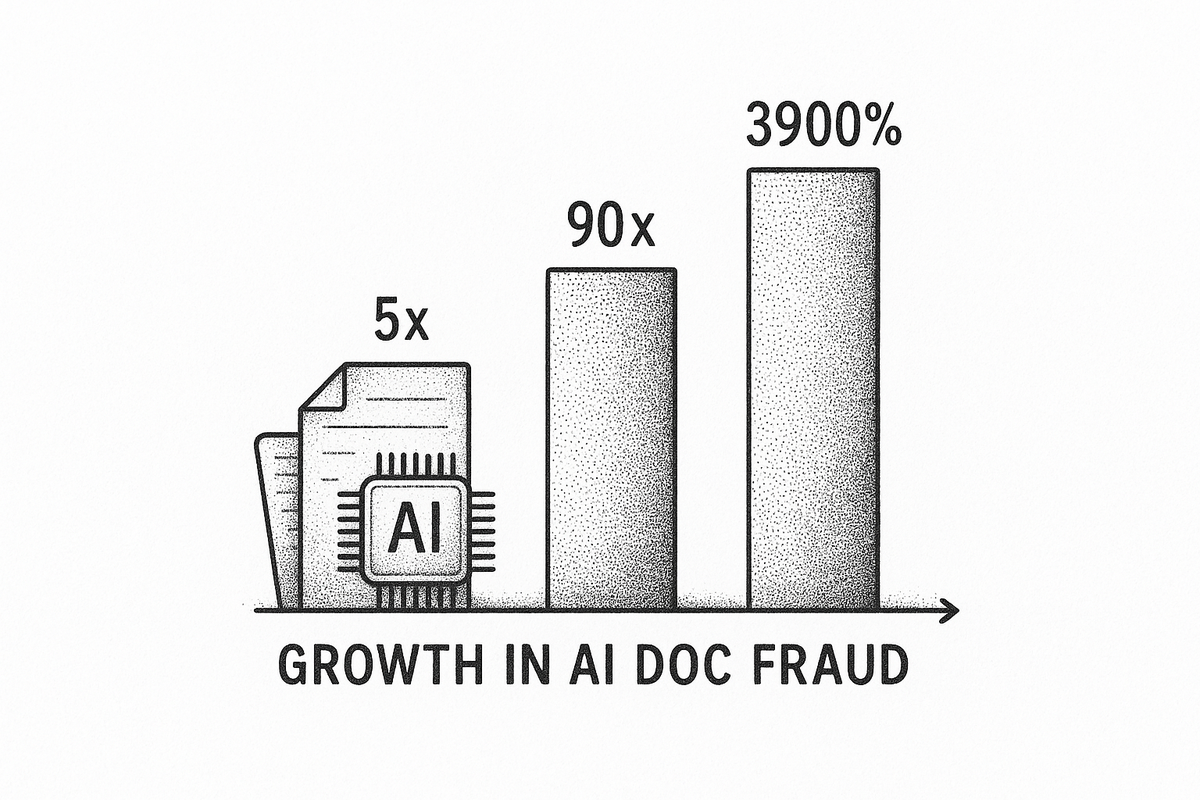
The scale of the shift is no longer speculative. Multiple independent data sources confirm that generative AI document fraud has moved from an emerging concern to an active operational threat.
According to Shufti Pro's 2026 Deepfake Identity Fraud Index, document deepfakes are the fastest-growing fraud category, projected to rise nearly 3,900% year-over-year in 2026. Deepfake fraud overall is on track for a roughly 495% increase over 2025. Entrust's 2026 Identity Fraud Report, analyzing over one billion identity verification events, found that deepfakes now account for one in five biometric fraud attempts and that injection attacks — where attackers bypass live capture processes entirely — surged 40% year-over-year.
Deloitte's Center for Financial Services estimates that generative AI could enable fraud losses of up to $40 billion in the United States by 2027, up from $12.3 billion in 2023. That projection reflects not just the sophistication of the tools but their accessibility. The barriers to creating convincing forged documents have collapsed. What once required graphic design skills and specialized equipment now requires a prompt.
The institutions treating this as a future problem are already behind.
Systematic Detection, Not Sharper Eyes
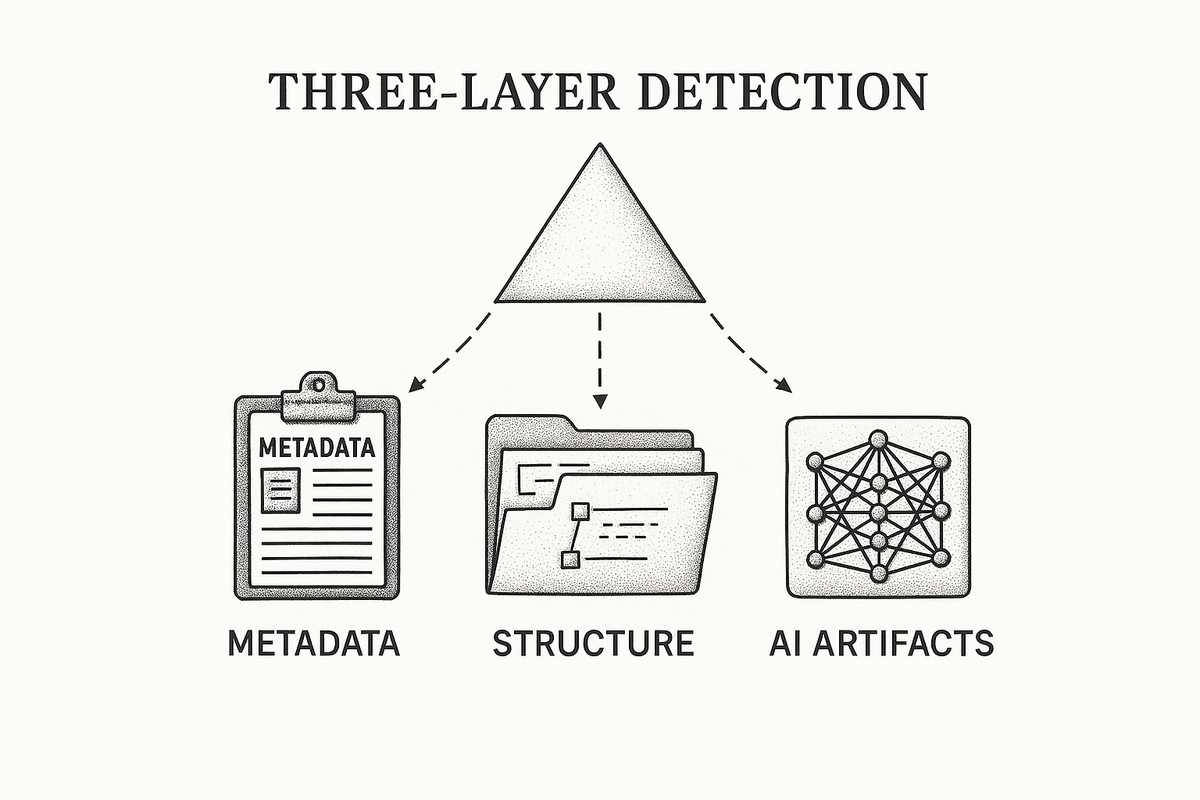
If visual inspection can't catch what generative AI produces, the detection model has to change. The alternative isn't better humans — it's multi-signal analysis that operates on dimensions humans can't perceive.
That means metadata analysis: examining whether a document's embedded properties — creation timestamps, software signatures, compression artifacts — are consistent with the claimed document type and issuer. It means structural analysis: checking whether the internal data structure matches known patterns for legitimate documents, not just whether the surface looks right. And it means AI artifact detection: identifying the specific computational fingerprints that generative models leave behind, even when the visual output is flawless.
None of these signals are visible to a compliance analyst reviewing a document on screen. They require systematic, automated detection layers that process documents before a human ever sees them.
This is the gap most compliance programs haven't closed. They've added AI awareness to their training decks while leaving their actual detection infrastructure unchanged. The policies reference generative AI as a risk. The detection systems still rely on the same template matching and OCR-based checks that predated generative AI entirely.
FinCEN's proposed effectiveness-based approach to AML compliance makes this structural gap harder to ignore. When regulators evaluate programs on outcomes rather than procedures, "we trained our staff" is not a sufficient answer to "how do you detect AI-generated documents?" The answer has to be architectural — detection systems that analyze metadata, structure, and computational artifacts at the point of document intake, before a human reviewer ever sees the file.
The compliance programs that will hold up — to regulators and to the converging fraud and AML threat — are the ones rebuilding their document verification to operate on signals that generative AI hasn't learned to fake. Metadata consistency. Structural integrity. Computational forensics. The signals are there. The question is whether institutions will build the systems to read them before the fraud volume forces the issue.
Frequently Asked Questions
How prevalent is generative AI document fraud in financial services?
AI-generated document fraud increased nearly 5x between April and December 2025, according to Inscribe's 2026 State of Document Fraud Report. Shufti Pro projects document deepfakes to rise nearly 3,900% year-over-year in 2026. While AI-generated documents still represent a small share of total document fraud, the growth rate indicates rapid adoption by fraudsters.
Can compliance analysts detect AI-generated documents through visual inspection?
In most cases, no. Generative AI produces documents that pass visual inspection — the fonts, layouts, photos, and seals appear authentic. Detection requires automated analysis of metadata, structural integrity, and computational artifacts that are invisible to human reviewers.
What has FinCEN said about generative AI document fraud?
FinCEN issued an alert in November 2024 warning financial institutions about deepfake media fraud, including AI-generated identity documents used to circumvent customer identification programs. The alert described typologies, red flag indicators, and reporting requirements under the Bank Secrecy Act.
What detection methods work against AI-generated documents?
Effective detection combines metadata analysis (creation timestamps, software signatures), structural analysis (internal data consistency with known document patterns), and AI artifact detection (computational fingerprints left by generative models). These multi-signal approaches operate on dimensions that generative AI hasn't yet learned to replicate.
How does FinCEN's effectiveness-based rule affect document fraud detection?
FinCEN's proposed effectiveness-based approach evaluates compliance programs on outcomes, not just procedures. Institutions need to demonstrate that their detection systems actually catch AI-generated forgeries, which requires automated, systematic approaches rather than procedural checklists.
.png)