Forgeries don't look wrong, they look perfect.
Check a document
trusted by FDIC, OCC, and Fed Regulated financial institutions


Valued and trusted by
%201.png)





Fast where it's easy.
Careful where it counts.
Sphinx scores each file the instant it lands, then spends effort only where it's warranted.
Step 1: Screening
Every file runs through Sphinx's checks the instant it arrives. The obvious cases, clean and forged alike, settle before anyone touches them.
Step 2: Cross Signal Analysis
Sphinx weighs edit history, metadata, template, numeric and gen-AI signals together. It separates normal noise, a re-save or a reformat, from a deliberate edit. No single oddity decides anything.
Step 3: Forensic Review
Only the genuinely hard cases reach a fraud analyst, who inspects the evidence Sphinx already assembled. Most documents never get this far.
Step 4: Verdict
A clear decision with the proof attached. Flagged files arrive with the manipulation already highlighted, ready to act on.
Run a document

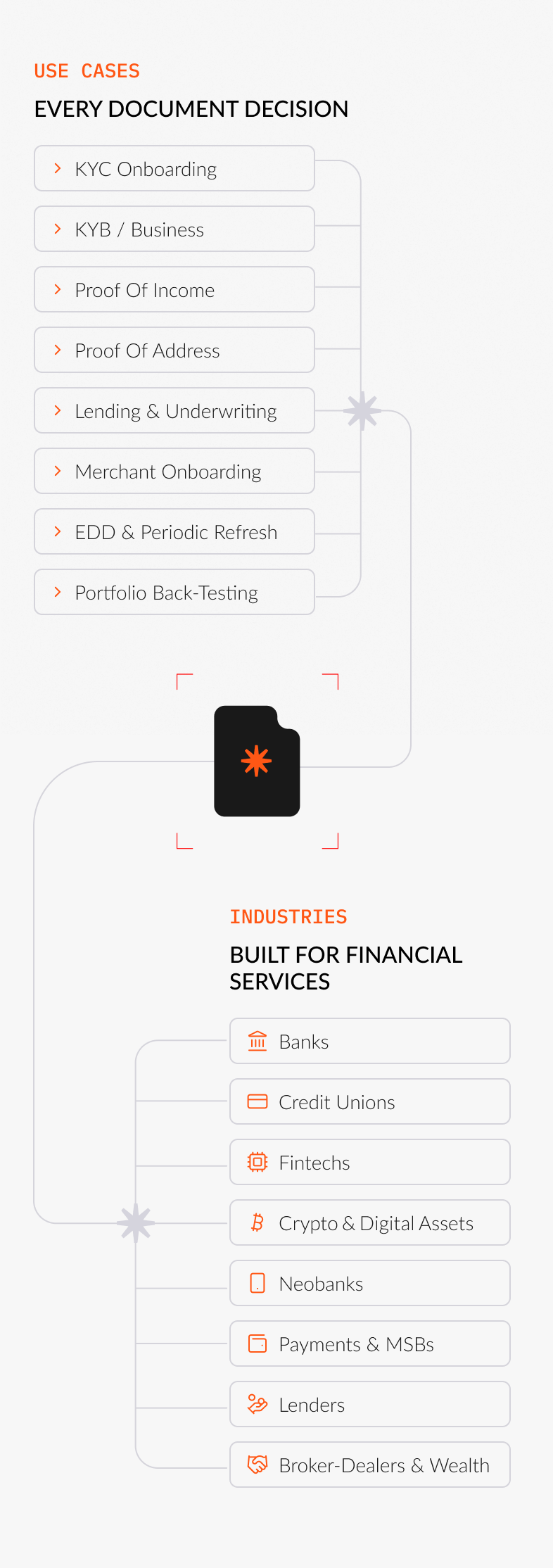
Every check that rests on a document.
Wherever a fraud or compliance team accepts a file to make a decision, Sphinx scores it first.
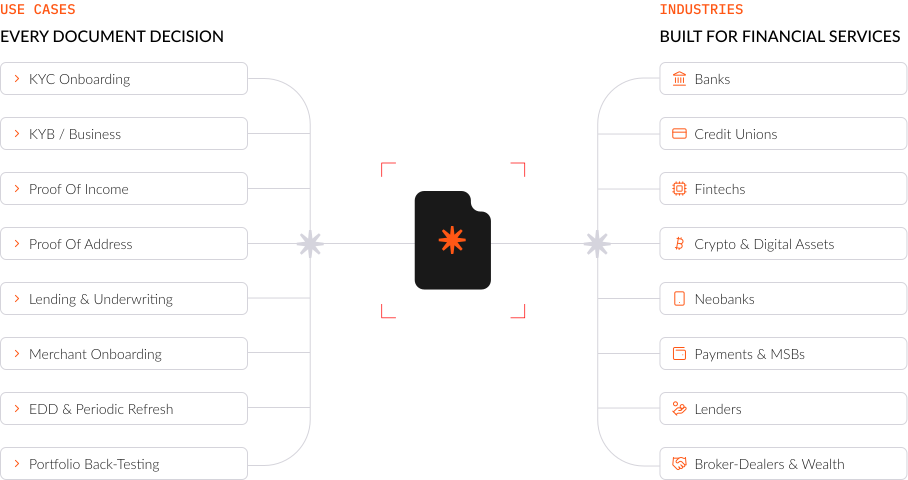
Six ways to read a file's real story
How a document was made is usually the story of the fraud.
Production method
Timestamp trail
Issuer matching
Consistency
Model artifacts
Recycled patterns
Pay per document. Nothing else.
Usage-based, no seats, no platform fee. The playground is free. When you go live, you pay for what you scan.
Free
.svg)
$O. 45/ document
.svg)
Custom
What Sphinx saves your fraud team
.jpg)
Let us try to
break your onboarding.
.png)