

TL;DR: The best sanctions screening software in 2026 balances data coverage, matching accuracy, and false positive management across an increasingly volatile regulatory landscape. With OFAC SDN List entries nearly tripling since 2018 and false positive rates still consuming 90-95% of screening alerts, platform selection determines whether compliance teams spend their days investigating genuine risk or chasing noise. This guide ranks eight leading sanctions screening platforms, explains what separates them, and provides a framework for choosing the right one.
What Makes a Strong Sanctions Screening Platform
Sanctions screening software checks customers, transactions, and counterparties against government-maintained lists of prohibited entities before a payment clears or a relationship begins. OFAC enforces sanctions on a strict liability basis, meaning intent is irrelevant. Civil penalties reach $330,947 per violation under IEEPA, with criminal exposure up to $1 million and 20 years imprisonment. The software is not optional infrastructure. It is the frontline control that stands between a financial institution and those consequences.
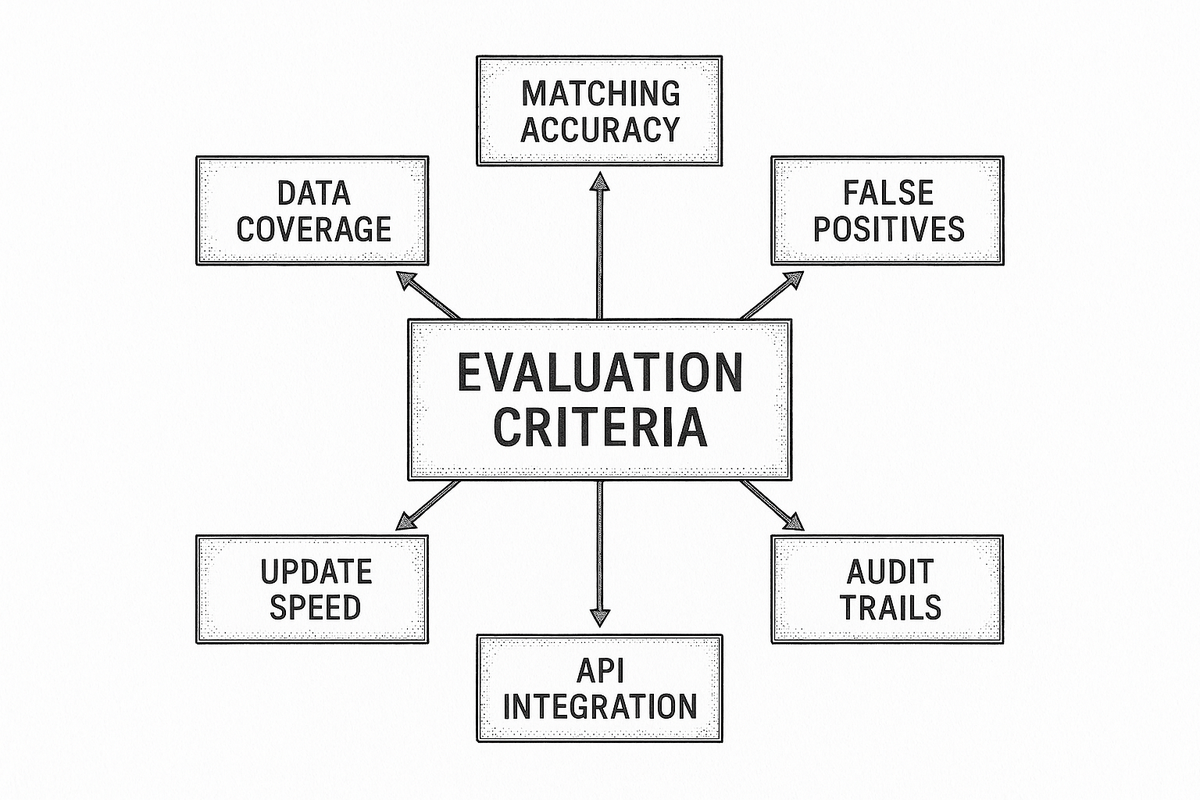
Six capabilities separate effective platforms from the rest. Data coverage determines whether the system screens against the full range of global lists, from the OFAC SDN to EU consolidated sanctions, UN Security Council designations, and UK HMT lists. Matching accuracy governs how well the engine handles aliases, transliterations, non-Latin scripts, and the subtle name variations that sanctioned parties use to evade detection. The FCA assessed sanctions screening systems at over 150 UK firms in 2026 and found that systems missed one in four names containing minor variations.
False positive rates remain the central operational challenge. Industry-wide, 90-95% of screening alerts require no action, yet each false positive consumes five to twenty minutes of analyst time. Platforms that reduce this rate without increasing miss risk deliver measurable ROI. Real-time update speed matters because designations can happen at any time, and weekly list refreshes leave gaps that regulators treat as violations. API integration determines how cleanly the screening engine embeds into onboarding, payment processing, and ongoing monitoring workflows. And audit trail completeness has become non-negotiable. OFAC's 2025 extension of sanctions-related recordkeeping from five to ten years signals that regulators expect complete, long-term documentation of every screening decision.
Best Sanctions Screening Software in 2026
The following platforms represent the leading options across different institutional profiles. Each evaluation covers core capabilities, strengths, limitations, and ideal fit. Rankings reflect a combination of data quality, technology differentiation, market presence, and suitability for modern compliance operations.
1. Sphinx
Sphinx sits at the top of this list not because it replaces the screening engines below, but because it solves the problem those engines create: alert volume that overwhelms compliance teams. Sphinx works best paired with one of the screening platforms below — it handles the alert triage and disposition layer while the screening engine handles data and detection. Rather than replacing an institution's existing screening engine or data provider, Sphinx deploys autonomous AI agents that operate downstream, taking the alerts those systems generate and automating the investigation and disposition work that currently consumes the majority of analyst time. The agents log into the same platforms analysts use, review alerts using the same data, cross-reference sanctions lists and customer records, assess risk, and document findings with full reasoning chains.
The result is measurable. Sphinx clients report 87% fewer false positives reaching human reviewers, 98% of cases resolved same-day, and an 80% reduction in case review time. Named customers including Equals Money, Alviere, Conduit, Wert, FV Bank, and Synctera have deployed Sphinx agents across screening and monitoring workflows. One customer cleared a six-month alert review backlog in two days. Every disposition is logged with an auditable trail explaining what data the agent examined, what logic it applied, and what conclusion it reached. SOC 2 Type II certified and GDPR compliant, with Y Combinator backing.
Sphinx does not replace the screening engine itself. It does not maintain its own sanctions database or generate the initial alerts. It operates at the alert triage and disposition layer, which is where compliance teams spend the vast majority of their time and where the leverage is greatest. For teams drowning in screening alerts, Sphinx eliminates the bottleneck without requiring a migration away from existing screening infrastructure.
Best for: Compliance teams with high alert volumes needing faster, auditable alert resolution without replacing existing screening systems. Deployment: SaaS, works with existing screening platforms. Pricing: SaaS subscription.
2. Dow Jones Risk and Compliance
Dow Jones Risk and Compliance provides the most human-curated sanctions and risk intelligence dataset in the market. Rather than relying on automated data aggregation alone, the platform employs a multilingual team of journalists and analysts who build investigative-grade profiles on sanctioned entities, PEPs, and high-risk individuals. The result is contextual intelligence that goes beyond raw list matching, covering ownership structures, associated entities, adverse media narratives, and connections that automated systems routinely miss. With more than four million records on companies and individuals, the Dow Jones Watchlist is relied on by organizations in every major market.
The Sanctions Ownership Research dataset is a particular strength. It helps institutions navigate OFAC's 50% rule by identifying entities that are blocked by virtue of aggregate ownership even when not individually listed on the SDN. The RiskCenter platform provides advanced screening capabilities, while data feeds delivered via XML, CSV, or API allow integration into existing compliance infrastructure. The premium Lists for Payments and Transaction Screening feed provides updates up to six times per day, with intervals as narrow as four hours.
Dow Jones operates primarily as a data provider rather than a full workflow platform, which is both its strength and its limitation. Institutions with established case management systems benefit from the flexibility. Those seeking a turnkey solution may need to pair Dow Jones data with a separate workflow platform. Pricing sits at the premium end, making it less accessible for smaller institutions.
Best for: Tier 1 banks needing deep investigative intelligence and enhanced due diligence profiles. Deployment: Data feeds, API, SaaS. Pricing: Enterprise custom, premium tier.
3. Refinitiv / LSEG (World-Check)
Refinitiv World-Check, now under the London Stock Exchange Group, maintains one of the most comprehensive sanctions, PEP, and adverse media databases available. The platform covers over 57,000 active sanctions records across 300-plus sanction programmes, with more than four million structured risk profiles spanning global jurisdictions. Five hundred researchers across 240 countries and territories, over 90% speaking two or more languages, provide around-the-clock monitoring. Major sanctions lists including OFAC, EU, and UN are monitored on a 24/7/365 basis.
World-Check One is the cloud-based screening platform that provides built-in case management and audit trails alongside the data. The newer World-Check On Demand product offers an API-first approach to real-time screening, delivering structured, enriched, machine-readable risk intelligence with reduced false positives through deduplication and secondary matching. World-Check Verify, built in partnership with AWS, targets low-latency embedded screening within payment and onboarding workflows. The data undergoes annual ISAE 3000 design-effectiveness certification, adding a layer of independent assurance that few competitors match.
Wide adoption across regulated industries and recognition by regulators worldwide makes World-Check the most defensible dataset choice when institutions need to demonstrate screening adequacy during examinations. Limitations include a steeper learning curve than modern alternatives, higher cost that may be prohibitive for smaller organizations, and a design heritage optimized for complex enterprise compliance workflows rather than agile fintech operations.
Best for: Global institutions and capital markets firms requiring the broadest dataset and regulatory defensibility. Deployment: Cloud SaaS, data feeds, API. Pricing: Enterprise custom, premium tier.
4. ComplyAdvantage
ComplyAdvantage built its position as the modern alternative to legacy data providers by delivering AI-sourced, human-verified risk intelligence that updates within minutes of new designations. The platform's NLP engine continuously scans global media sources to detect adverse media, new sanctions, and PEP status changes faster than traditional journalist-curated models operating on daily or weekly refresh cycles. Backed by $145 million in Series C funding, ComplyAdvantage has scaled rapidly across the fintech and digital banking segments.
API response times measured in sub-seconds make ComplyAdvantage the fastest screening option for high-volume payment processing environments. The visual rule-builder for screening configuration requires no coding, empowering compliance officers to adjust matching thresholds and risk rules directly. Coverage spans global sanctions including OFAC, UN, EU, and UK HMT, plus ownership data supporting the 50% rule. The REST API and modular architecture integrate directly into mobile apps, core banking systems, payment processors, and CRMs. ComplyLaunch provides a startup-friendly entry point with scaled pricing.
Limitations include less depth in historical investigative profiles compared to Dow Jones and Refinitiv, a newer track record with traditional bank regulators, and transaction monitoring capabilities that, while improving through the Mesh product launched in late 2025, are less mature than the core screening offering. For institutions that need a fast, accurate screening layer on top of existing infrastructure, ComplyAdvantage delivers. For those requiring the full investigative workflow, supplemental tools may be necessary.
Best for: Fintechs and digital banks wanting real-time, API-first screening at scale. Deployment: Cloud SaaS, REST API. Pricing: Volume-based custom, startup tiers available.
5. NICE Actimize
NICE Actimize remains the default sanctions screening choice for Tier 1 banks. The WL-X (Watch List Filtering) platform provides enterprise-grade name screening and transaction filtering across the full AML lifecycle, complemented by the broader ActOne suite covering customer due diligence, transaction monitoring, and case management. Implementations span roughly 85% of the world's largest banks, giving the platform an unmatched depth of enterprise deployment experience.
The WL-X engine handles sanctions, PEP, and watchlist screening with configurable fuzzy matching, phonetic algorithms, and entity resolution capabilities designed for complex multi-entity structures. The platform supports both batch and real-time screening modes with the throughput capacity required for institutions processing billions of transactions. Integration with core banking systems from Temenos, FIS, and Fiserv is mature and well-documented. Extensive regulatory reporting templates cover FinCEN, FCA, MAS, and other jurisdictions.
The trade-off is complexity and cost. Implementation timelines stretch to 12-18 months for full deployments. The platform carries technical debt from acquisitions and legacy architecture, and its innovation pace on AI-native capabilities lags newer competitors. Enterprise pricing, typically $500,000 or more annually for mid-size banks, places it out of reach for most mid-market buyers. For large institutions with established compliance technology teams and complex multi-jurisdictional requirements, NICE Actimize delivers proven, regulator-tested infrastructure. For everyone else, the overhead may not justify the investment.
Best for: Tier 1 and Tier 2 banks with complex enterprise requirements and dedicated compliance technology teams. Deployment: On-premise, cloud, hybrid. Pricing: Enterprise custom, $500K+ annually.
6. LexisNexis Risk Solutions
LexisNexis offers the most integrated sanctions screening experience among traditional providers, combining 1,700-plus global watchlists with AI-powered automatic match resolution, intelligent decisioning, and case management in a single platform. The Bridger Insight XG platform handles transaction-level screening with millisecond response times for real-time interdiction across SWIFT, card, and ACH payment rails. The WorldCompliance database contains over seven million profiles across sanctions, PEPs, and adverse media.
The platform's AI analytics automatically resolve clear non-matches, reducing analyst workload while maintaining complete audit trails. LexisNexis also covers trade compliance screening including dual-use goods, vessels, and ports, a capability most competitors lack entirely. The combined screening and case management approach reduces vendor integration complexity for institutions building compliance programs from the ground up. FircoSoft, part of the LexisNexis compliance suite, provides specialized payment filtering that serves some of the highest-volume payment processors globally.
Limitations include a feature set that can overwhelm smaller organizations, pricing that typically requires annual enterprise commitments, and an interface that feels less intuitive than modern API-first alternatives. Data licensing costs can escalate significantly at scale. For large enterprises that need integrated screening, decisioning, and case management in a single platform, with trade compliance coverage as a bonus, LexisNexis delivers comprehensive capabilities that few competitors match.
Best for: Large enterprises and payment processors needing integrated screening, case management, and trade compliance. Deployment: Cloud, on-premise, modular. Pricing: Enterprise custom, per-screen and annual models.
7. Napier AI
Napier AI takes a compliance-first AI approach to sanctions screening. The UK-based company, developed in collaboration with regulators, offers the Continuum platform, an integrated financial crime risk management suite that covers client screening, transaction screening, transaction monitoring, and regulatory reporting. The platform's client screening solution ingests and screens customer records at scale, with AI-powered fuzzy name matching supporting 25-plus languages, and can go live in as little as 21 days.
The standout capability is configurability. Napier AI's graphical rule-builder lets non-technical compliance officers define, iterate, and test screening rules in a sandbox environment using real data before deploying to production. The AI Advisory feature recommends whether to review or discount an alert based on match quality and available attributes, providing explainable, human-readable justifications behind each recommendation. Transaction screening handles hundreds of millions of transactions against sanctions lists in real-time, with support for multiple screening configurations across different business units and geographies.
Napier AI's deployment flexibility is a differentiator. The platform runs in fully managed SaaS, any public or private cloud, air-gapped environments, or hybrid configurations, making it suitable for institutions with strict data residency requirements. Limitations include a smaller client base than established vendors, which means fewer reference cases in some verticals, and less depth in proprietary sanctions data compared to Dow Jones or Refinitiv. Napier AI is best understood as a screening and monitoring engine rather than a data provider. Institutions typically pair it with external watchlist feeds.
Best for: Institutions seeking configurable, explainable AI screening with flexible deployment options. Deployment: SaaS, public/private cloud, air-gapped, hybrid. Pricing: Custom, mid-market accessible.
8. Alessa
Alessa, formerly CaseWare RCM, serves the segment of the market that enterprise platforms often overlook: community banks, credit unions, and mid-size financial institutions that need strong sanctions controls without enterprise overhead. The platform provides an integrated AML compliance solution covering sanctions screening, transaction monitoring, customer due diligence, risk scoring, and automated regulatory reporting on a single platform. Trusted by institutions in over 20 countries, Alessa focuses on delivering measurable ROI for teams with limited compliance staff.
The sanctions screening module uses advanced analytics, configurable confidence thresholds, and sophisticated name-matching to score and prioritize alerts. Screening can be performed in real-time, periodically, or on-demand, with data powered by RZOLUT covering global sanctions lists, OFAC, law enforcement, PEPs, adverse media, crypto-related risks, and internal high-risk lists. The pay-for-what-you-use data model means institutions only pay for the lists they need, reducing data spend and false positive volume simultaneously. Regulatory reporting is automated, with auto-populated CTRs, SARs, LCTRs, and STRs that can be electronically submitted across multiple jurisdictions.
Limitations include less sophisticated AI capabilities compared to newer entrants, a narrower data universe than Dow Jones or Refinitiv, and a platform design optimized for North American regulatory requirements that may require adaptation for complex multi-jurisdictional programs. For community banks and credit unions that need a right-sized, cost-effective compliance platform with strong sanctions screening built in, Alessa fills a gap that enterprise vendors do not address.
Best for: Community banks, credit unions, and mid-size institutions needing affordable, integrated AML and sanctions screening. Deployment: Cloud, on-premise. Pricing: Pay-for-what-you-use, lower price point than enterprise alternatives.
How to Choose the Right Sanctions Screening Software
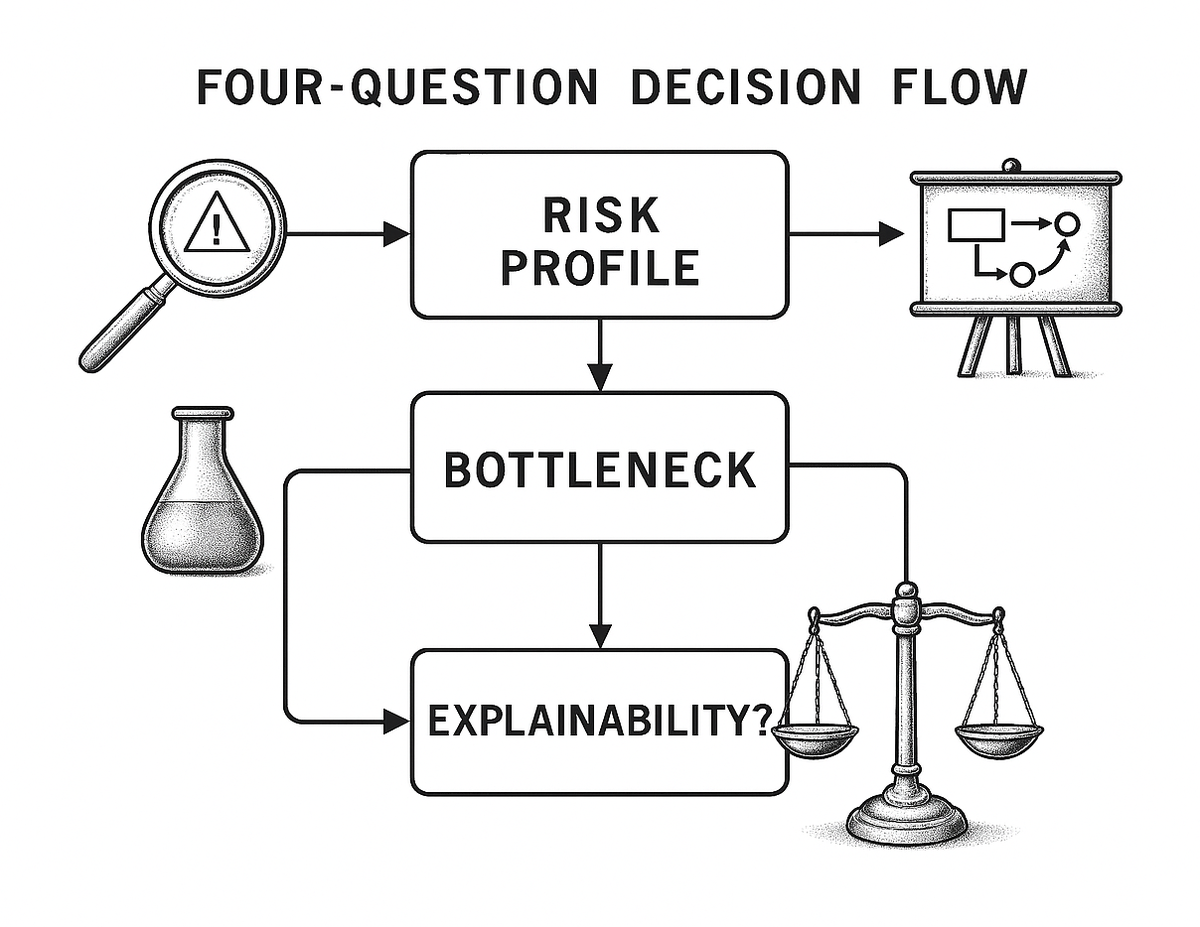
Picking sanctions screening software is not a feature comparison exercise. It is an architectural decision that shapes compliance operations, regulatory defensibility, and operational costs for years. The right framework starts with four questions.
What is your institution's risk profile?
A Tier 1 bank processing cross-border payments across 50 jurisdictions faces fundamentally different sanctions risk than a domestic credit union. The bank needs deep data coverage, multi-regime list management, and sophisticated entity resolution across non-Latin scripts. The credit union needs reliable screening against core OFAC lists with right-sized pricing. Platforms like Dow Jones and Refinitiv World-Check serve the former. Alessa and ComplyAdvantage serve the latter. Matching the platform to the risk profile avoids paying for capabilities the institution does not need while ensuring coverage where it does.
Where is the operational bottleneck?
If data quality is the problem, switching to a stronger data provider like Dow Jones, Refinitiv, or ComplyAdvantage will have the most impact. If alert volume from screening is overwhelming the team, AI-driven match resolution from LexisNexis or Napier AI, or agentic triage from Sphinx, will matter more. If integration friction with existing systems is the constraint, API-first platforms like ComplyAdvantage and the newer LSEG World-Check products address that directly. The bottleneck determines the solution. Institutions that reduce screening alert review time at the triage layer often see greater operational gains than those who replace the screening engine entirely.
How important is explainability?
Regulators in 2026 are placing significant emphasis on the ability to demonstrate how matches are generated, why alerts fire or do not fire, and how tuning decisions align with documented risk appetite. Any AI-driven platform must produce audit trails that satisfy examiners. Napier AI's explainable AI framework, Sphinx's interpretable agentic approach, and LexisNexis's documented match resolution all address this requirement. Black-box automation that reduces false positives but cannot explain its reasoning creates a different kind of regulatory risk.
What does total cost of ownership look like?
Licensing fees tell only part of the story. Implementation costs for enterprise platforms like NICE Actimize can exceed the first year of licensing. Data costs from providers like Dow Jones and Refinitiv escalate with volume. Integration engineering, training, and ongoing model tuning add further. A platform that costs less per screen but takes 18 months to deploy may cost more over three years than a pricier solution that goes live in weeks. Evaluate total cost over a three-year horizon including implementation, data, integration, and operational overhead.
Frequently Asked Questions
What is sanctions screening software and why is it required?
Sanctions screening software checks customers, transactions, and counterparties against government-maintained lists of prohibited entities, including the OFAC SDN List, EU consolidated sanctions, UN Security Council designations, and UK HMT lists. Financial institutions are legally required to screen before processing payments or establishing business relationships. OFAC enforces sanctions on a strict liability basis, meaning a violation triggers penalties regardless of intent. Civil penalties reach $330,947 per violation, with criminal exposure up to $1 million and 20 years imprisonment.
How much does sanctions screening software cost?
Pricing varies dramatically by vendor and institutional size. API-first platforms like ComplyAdvantage offer volume-based pricing with startup-friendly tiers. Integrated platforms like Alessa provide pay-for-what-you-use models accessible to community banks and credit unions. Mid-market solutions typically run $50,000 to $250,000 annually. Enterprise deployments from Dow Jones, Refinitiv, NICE Actimize, or LexisNexis can exceed $500,000 annually including data licensing, implementation, and support. Total cost of ownership over three years often runs two to three times the initial licensing quote.
What is the biggest operational challenge with sanctions screening?
False positives. Across the industry, 90-95% of screening alerts require no action, meaning compliance teams spend the vast majority of their time investigating matches that lead nowhere. This creates analyst fatigue, delays the investigation of genuine threats, and drives compliance costs higher. Platforms that reduce false positive rates through better matching algorithms, AI-driven auto-resolution, or agentic alert triage deliver the most measurable operational impact.
How quickly should sanctions list updates be reflected in screening systems?
Regulators expect near-real-time ingestion. OFAC specifically cited failure to re-screen existing customers after new designations as a violation factor in recent enforcement actions. Leading platforms like ComplyAdvantage reflect new designations within minutes. Dow Jones's premium feed updates up to six times daily. Weekly or monthly update cycles are increasingly viewed as inadequate and have been cited in enforcement settlements. Institutions should verify list update latency as a key performance indicator.
Can AI replace human review in sanctions screening?
AI can automate the triage and disposition of clear non-matches, which represent the vast majority of alerts. Platforms like Napier AI, LexisNexis, and Sphinx use various AI approaches to reduce the volume of alerts requiring human attention. However, true positive matches, complex ownership structures, and ambiguous cases still require human judgment. Regulators expect human-in-the-loop oversight for all automated disposition decisions involving sanctioned parties or blocked transactions. The practical role of AI is not to replace analysts but to ensure they spend their time on alerts that actually require expertise.
.png)