
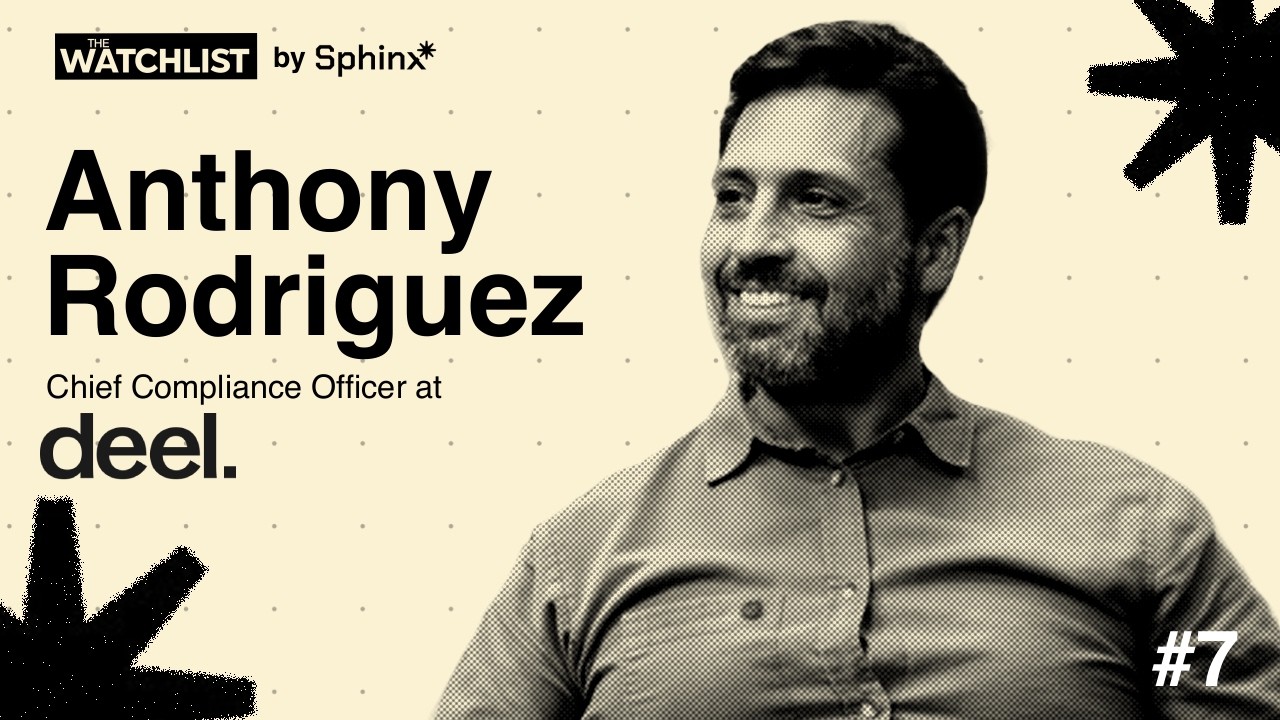

TL;DR: Anthony Rodriguez has spent more than twenty years in money services compliance — from JPMorgan to running a BSA/AML program spanning 41,000 agent locations across 85 countries, through AFEX, Inter, and Corpay, and now as CCO at Deel, one of the fastest-growing companies in global workforce infrastructure. He explains what de-risking actually looked like from the inside, why worker misclassification is the defining risk in the employer-of-record model, and how you build a compliance culture across North America, APAC, and EMEA without flattening local nuance.
What This Episode Covers
Anthony Rodriguez traces a career spent at the sharp end of regulatory scrutiny. In 2006, he wrote to FinCEN naming 67 banks that had closed the door on his employer — not for wrongdoing but simply for being an MSB. He reflects on why he stayed in that world rather than retreating to traditional banking, and what it taught him about building programs that hold up when institutions decide you are too much trouble to serve.
The conversation explores what compliance means at a company that went from an $800 million run rate to a valuation north of $17 billion, and what it was like to join Deel in February 2025 and have a landmark lawsuit land weeks later. Anthony breaks down the weight of personal liability on chief compliance officers, and how decentralized compliance structures give local teams 51% of the vote while maintaining global standards.
Anthony also gives a direct read on AI in compliance: where the false-positive reduction claims hold up and where they do not, what explainability has to look like before a regulator will accept it, how the EU AI Act's high-risk classification for HR systems changes the calculus ahead of its August 2026 obligations, and whether the industry's threat model has caught up to deepfakes in onboarding.
Who Is Anthony Rodriguez
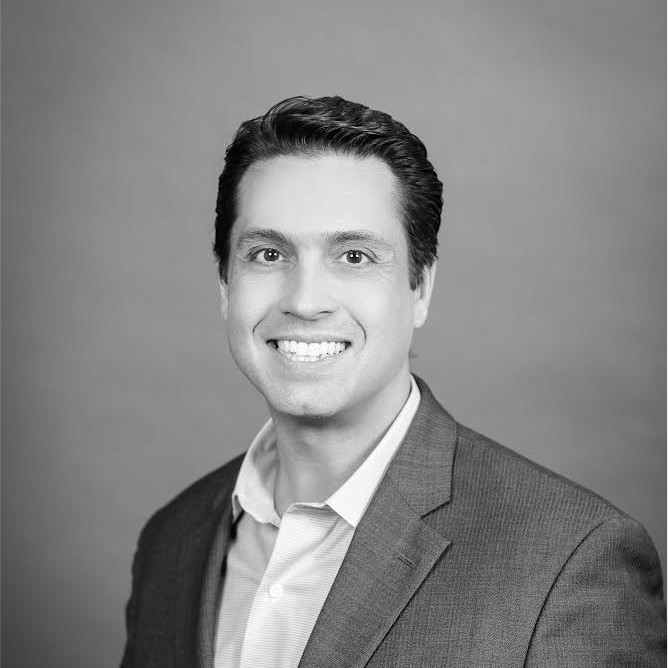
Anthony Rodriguez is the Chief Compliance Officer at Deel, where he leads the company's global compliance program across more than 150 countries. With more than 20 years of experience in MSB and fintech regulatory compliance, Anthony has built and scaled compliance programs at Corpay, AFEX, RIA Financial Services, JPMorgan Chase, and Envios R.D./Pronto Envios. His work spans AML/CFT, OFAC sanctions, anti-bribery and corruption, fraud risk, and BSA/FinCEN obligations across North and South America, Europe, and Asia. He holds CPA, CAMS, and additional compliance credentials.
The De-Risking Wave and What It Taught About Resilience
In the mid-2000s, banks began systematically closing accounts for money services businesses — not because of suspicious activity, but because MSBs were deemed too risky to serve. Anthony lived through this de-risking wave, ultimately writing to FinCEN to document 67 banks that had refused to bank his employer. That experience shaped his approach to building compliance programs that survive institutional skepticism — programs with documentation, audit trails, and risk frameworks strong enough to withstand scrutiny from partners who would rather walk away than engage. Hamza Siddiqui from Chime explores a related dynamic around build-versus-buy decisions for AML tooling.
Worker Misclassification as the Defining EOR Risk
At Deel, the compliance challenge is fundamentally different from traditional financial services. The employer-of-record model introduces worker misclassification as a core risk — the question of whether someone is properly classified as an employee or a contractor across dozens of jurisdictions with different labor laws. Anthony explains how this risk differs from AML or fraud in its legal structure, its enforcement patterns, and the personal liability it carries for compliance officers who sign off on classification decisions.
Building a Single Risk Culture Across Three Continents
Running compliance at a company with operations across North America, APAC, and EMEA requires what Anthony calls a decentralized control model. Local compliance officers get 51% of the vote on matters within their jurisdiction. The CCO's job is to set principles and guidelines, provide tools, and ensure the people on the ground are successful. This approach avoids the failure mode of centralized compliance — where headquarters imposes frameworks that don't account for local regulatory nuance — while maintaining consistent risk standards globally.
AI in Compliance: What Works and What Doesn't
Anthony gives a practitioner's assessment of AI in compliance workflows. False-positive reduction claims hold up in some contexts but not all — the difference depends on the quality of training data and the specificity of the risk being monitored. Explainability remains the gating factor for regulatory acceptance. Before a regulator will accept an AI-driven decision, they need to understand not just the output but the reasoning path that produced it. The EU AI Act's classification of HR systems as high-risk adds a new layer of compliance obligation, and deepfakes in onboarding represent a threat that most identity verification systems are not yet equipped to handle. Sphinx's analysis of false positive reduction provides technical context for these challenges.
Frequently Asked Questions
What is the de-risking wave and how did it affect money services businesses?
De-risking refers to the period in the mid-2000s when banks systematically closed accounts for money services businesses, not because of wrongdoing but because MSBs were categorized as inherently high-risk. This forced MSB compliance officers to build programs robust enough to demonstrate legitimacy to skeptical banking partners — a challenge that shaped how modern fintech compliance programs approach documentation, audit trails, and risk frameworks.
What is worker misclassification risk in the employer-of-record model?
Worker misclassification occurs when someone is classified as an independent contractor when they should legally be classified as an employee, or vice versa. In the employer-of-record model used by companies like Deel, this risk is amplified because classification rules vary dramatically across jurisdictions. Misclassification can result in tax penalties, labor law violations, and personal liability for compliance officers who approved the classification.
How does Deel structure compliance across 150+ countries?
Anthony Rodriguez describes a decentralized control model where local compliance officers have primary responsibility for their jurisdictions — what he calls 51% of the vote. The CCO sets overarching principles and guidelines, provides tools and training, and ensures local teams have the resources to comply with their specific regulatory requirements. This approach balances global consistency with local regulatory expertise.
What does the EU AI Act mean for compliance teams using AI in HR?
The EU AI Act classifies AI systems used in employment decisions — including hiring, onboarding, and worker classification — as high-risk. This means compliance teams must meet specific requirements around transparency, human oversight, data quality, and documentation before deploying AI in HR workflows. The Act's obligations take full effect in August 2026, creating an immediate compliance planning requirement for companies operating in the EU.
Are deepfakes a real threat in compliance onboarding?
Yes. Deepfakes in onboarding represent a growing threat that most identity verification systems are not yet fully equipped to handle. As synthetic media becomes more convincing, the industry's threat model needs to evolve beyond traditional document verification to include liveness detection, behavioral analysis, and multi-factor identity confirmation. Anthony Rodriguez notes that this is one area where the compliance industry's awareness has not kept pace with the technology.
Episode Transcript
Alex: So you've spent more than two decades across money services, fintech, cross-border payments and now global workforce compliance at Deel. What originally pulled you into the space and what kept you in it as the problems became more global and more ambiguous?
Anthony: Yeah. So what pulled me into the space was simply, you know, fate and destiny. I thought I was going to grow up to be a CFO and I happened to put Spanish on my on my resume and the company that hired me had a a company called Dominican Communications Corp and they were had inside of their stores they had an agency called Pronto and Vio which was focused on sending money to the Dominican republic. So as as their accountant started doing their books and as we started to understand the business, we started to realize that there was an opportunity for them to get licenses in the United States and that was back in the mid '9s when in the US there was about 21 licenses at at at the time. And the rest was you know one thing just led to another through my through my networking and and just through like my preparation.
Alex: It seems like it worked out pretty well. Good networking.
Anthony: It's been it's been a fun ride.
Alex: And so as I said in the cold open and something you forgot about, but you did write a letter to FinCEN in 2006, so 20 years ago, listing 67 banks by name that had refused to bank money services businesses. 20 years later, you're CCO a Deel. What's been the through line between that letter and where you're at today?
Anthony: Yeah, I mean I think you know the main through line is about financial inclusion. If you if you look throughout my my my career, I've I've worked with companies that have provided financial inclusion to the global the global world, right? And the the one thing that's special about Deel and that's different is that it takes financial inclusion to another level. both providing financial services as well as economic opportunities, giving talented people the opportunity to work no matter where they are in in in in in the world and indirectly maybe that hurts the remittance industry a little bit.
Alex: I fully agree. And so you also me so you you told me like you're an accountant. so you're CPA, CAMS, CIP, CIPM. It's a lot of different credentials for a single person that aren't like all they're all related but oftent times people have one or the other. what's the history of that? Was that intentional? was there a specific moment you realized you needed another one? And yeah, how do you go from that you know accountant background into fully going to BSA ML and compliance?
Anthony: Sure. So I think you know I'm I'm I'm a realist and I think there's a true reality about credential bias right and I've experienced it with my my my my CPA. So you know how do you show that you have some sort of knowledge right around the topic and the reason why I kind of started with all of those was out of necessity. If you also ask me like 10 words to describe myself number two will always be a learner. So I love I love to learn and I think you know being being a compliance officer is is about learning and being a chief compliance officer there's many compliance domains that you have to have knowledge about and you know once I realized I wasn't going to be a CFO but I wanted to be a chief compliance officer I felt that those were necessary competencies for me to have to bring value to the companies that I worked for.
Alex: Yeah. And so you have those competencies obviously, but I think like as you grow into the levels of compliance, you realize more and more that it's a really strategic leadership role as well. That's not just about compliance and financial crime, but about the business in general and like financial stability and whatnot. when did you realize that that it was a strategic leadership role more than just a support function for the business?
Anthony: Yeah. So, so I think I always had that that attitude because of the fact that as a CPA you're an adviser to the business, right? And compliance enables business whether people like like it or not. But if you really kind of look at the the companies that have been successful in financial services, many of them lead with compliance and have a complianceled strategy. , so for for me it was kind of always in in my blood. I look at myself more as a a businessman, right? My job is to enable the business to be successful within the regulatory regimes that we operate in.
Alex: Cool. Love it. , I'm going to go back a little bit further into your whole career just to like give everyone an idea. You were at JP Morgan, you went to remittance businesses, AEX, Inter, Corp, now Deel. but you did go in the mid 2000s RIA Financial Services and you were running compliance for one of the world's largest privately owned money transfers company. So it's 40 at the time it was 40,000 agent delegations 85 countries which back in the mid 2000s was a lot of scale and a lot of global footprint which seems like you went back to today at Deel. but what did running compliance at that scale at that time teach you that you still use today at Deel?
Anthony: Yeah I I think the main main main thing that it it it taught me is that you have to have a decentralized control right so as as the compliance officer of a global business you have you have other compliance officers who have responsibilities for your your licenses or around the world. So you build you build teams around around those people and the strengths of of of those people and you give them 51% of the vote. My job as a chief compliance officer is to provide them the principles and guidelines to comply with the regulations that they need to comply with locally. So you have, you know, overarching ideas that you you provide to them and you give them the tools. And my job as the chief compliance officer, you know, my joke is when somebody says, "Hey, you know, what do you do for a living?" I said, "That's kind of a little hard question, right? My job mainly is to make sure that the people who are on my team are successful."
Alex: Yeah. No, 100%. , when people make successful career moves, it always feels logical in hindsight, you know. , oh, that idea seemed easy. Of course, I should have done that 20 years ago. And you did go through a lot of really good companies. I mean, AEX, Inter Corp, as I said, now a Deel. , maybe those weren't as logical the moment you made those ch those choices and moved with these companies. Which move made the least sense to outsiders, but made a lot of sense to you?
Anthony: Yeah, I don't think like it'll be one that you kind of find on my resume, but for for for one that you actually find on my resume. So, I'll just like fill that in, right? I I actually left my my professional career to start a personal training business in in in the late like 90s. And then I I I met my wonderful wife who I've been married to 27 years and
Alex: Together 30 years this this this this September and realized that I I couldn't envision myself like having a family as a personal trainer. So I actually went back to the same position that I that that that I left. and and and that really you know taught me a lot of things from from the perspective of how to Deel with people, how to sell and and those interpersonal skills that I learned as a personal trainer. I use them every day in in managing people and in you know basically motivating influencing and and sometimes getting people to do things that they don't really want to do but it's for everybody's good.
Anthony: It's funny it's interesting you're I've talked to a lot of people in compliance and a lot of them had have had similar like few months years of doing something completely different. And I've had someone have their own wine farm and someone creates supplements which I guess is kind of related with the personal training. So I maybe should dig into that a little bit more. I don't have that right now at least. which one was the hardest? Which one had like the most amount of work novelty to it when moving into the role that you didn't necessarily expect? So, , you know, I think each each each one of those roles was kind of a natural, , progression, right, in in in in my career. , I think the the the the one that was I'd say my current my my my current position, right? It's it's kind of taken me back 20 years and the pace that we work at is is just just a a different level and and I've always you know believe that speed was in important and now I could really see that you know speed does create advantage
Alex: For sure. And so I want to go into what becoming a CCO actually looks like. I mean when judgment actually becomes the the job. So as we said early in the career you engaged directly with the regulators whether it's like the finen letter you wrote on MSB banking access but whether it's that or other events that you've had later on. What did this teach you about the gap between the regulation and the reality which I feel like the higher you get up into the ladder the more you realize that actually there's a big gap between what is the regulation what Fininsson says and what's actually happening on the front lines. well I think you know the biggest thing is growing up in my career in the money service business right there was always lack of direction or you know you're you're you're in a unregulated environment in some places regulated environment in other places. there was a lot of always ambiguity in in what you know how do you build a how do you build a program right and and I think you just take clues right one of the things that I would always say is that we want to have a program that looks like a banking program with the flexibility of a money service business right so meaning that you you know you create a little bit of complexity so that way in places where you have to be competitively where competition really drives level of compliance, right? Because if you don't if if you don't meet the requirements that the market has, even though you want you're in another place that high has higher standards, you need to still meet those standards. So I think you know flexibility, adaptability are are all very important when you're building out a program like that. And how do you build credibility with like the regulators, the executives, the boards? And how long does it actually take? Because I mean, especially when you're going into compliance that's so international as you've been doing quite a bit actually over the years, right? Like most services that you worked were international businesses with international compliance needs. That's right.
Anthony: I mean as a vendor I we do work with quite a few of these companies and I do understand like the complexities of it. So, how do you create credibility there? And how do you build a team that's actually able to handle all these different nuances?
Alex: Yeah. So, I mean, you know, credibility is built over over time, right? You know, you you do what you say you're going to do and and and and you deliver on that. How do you build credibility along the way? I you know, I mean, early in my career, I went to a lot of conferences, right? I started going to AAM's conferences before it was AAM's right when it was moneyaundering.com was was was the name of
Anthony: I didn't even know that was the name of it
Alex: Name of the conference right so you know I always believed in in in the power of like networking right so
Anthony: That's where we met so
Alex: You you build credibility through like meeting people getting to know who they are sharing sharing ideas you know seeing how you could help each other right when when there isn't a need so you're giving to to to to the community and I think with regulators you have to have a proactive like regulatory outreach right like in the in in the US there's a money transmitter regulators association meeting right those are important meetings to go and and show up to right where where are your regulators going to be right for for the bankers the AB BA, ABA, right, showing up and and and and back in those days, you know, truth of the matter is I was probably one of the only MSPs that wasn't a household name. So, wasn't Western Union, wasn't Money Graham, wasn't American Express, right? So, you buil you build credibility by, you know, making yourself part of the crowd and having people get to know you and, you know, showing them that, you know, you are the brand, right? like I represent I am Deel is me, right? And and and I have to build you know my professional credibility and you know you be consistent throughout your career and deliver on what you say you're going to do.
Anthony: So super interesting about that credibility but now another word that sounds the same is liability and you mentioned the personal aspect of it. I was recently in the UK and something you know that I learned as well is that in the UK the MLRO role has this person has actually the liability as a compliance officer of any fine issue regulatory downfall that might come of the program. it goes onto a liable like a personal liable risk instead of a company one and so the personal liability of a CCO has become much louder conversation right the SEC has been settling cases against individual CCOs and there's an active debate about whether that's pushing good people out of the role what do you think about that risk personally
Alex: Never worries me one minute never lose a second of sleep over over personal liability I think it's You know, I think it's something that the regulators probably have not used enough in in in in the history of enforcement. The people who I've seen that have had, you know, person personal liability applied to them, when you really read the cases, they were being, you know, willfully negligent. , and so it's not something that I like really ever worry about cuz I know my principles and I know that the people that I work for have always been people that, you know, want to do the right thing all all all of the time and choose the, you know, the right thing over the wrong thing. So, it's always been very like easy for me, but I could see how, you know, personal liability can can can be an issue if you don't have the right support from from the people that you work for.
Anthony: And so, I'm super curious about something. the past year, especially the past six months probably have been insane in terms of how AI has been implemented across businesses. and I'm sure especially at Deel, which is like such a forwardthinking company. This issue of personal liability does seem like it has its limits, especially with the implementation of AI. So before systems would generate alerts, generate cases, pull data, but they wouldn't actually make decisions. And although today there's still a big human in the loop component, we can expect that in a few months, years, or whatever the timeline might be, this AI internally is going to start making decisions. How do you think that's going to change the personal liability aspect of it? Do you think that regulators are actually going to change the way this liability is set and then it could be given to this vendor or this AI this third party AI or is it going to be kept on the individual or now on the organization? How do you think that's going to change the landscape?
Alex: Yeah. So, so I think the the key thing that regulators want is I'll put it very grossly. They they they want a throat to choke.
Anthony: Yeah.
Alex: Right. Right. And and a throat to choke is is is never going to change no matter how much technology you you you put on something in in in a regulated environment. Right. So, I think that, you know, you hear about, you know, the one-man shop and that AI and you could you could create billion-dollar companies with agents and and I really, you know, believe that that is that's true and that's, you know, potentially a future of a lot of like how businesses we're going to have a lot of small potentially businesses of of people with a lot of good ideas. But I think in the regulated environment, you're always going to have people that have to be accountable. there has to be a human and and you know you hear human in the loop I I I really think about it's always human at the end no matter how much AI that you use you're making the decision on you know which one of those workflows or lowrisk high risk which one of those like you're going to allow to you know make those automated decisions and and also you know you're going to have to have a quality assurance right you're going to have to have I'm I'm an accountant right so you know auditing you're going to constantly be, you know, auditing the agents. And I just think about , you know, that being, you know, as people, right? Like agents, if you personify them, , you're going to need to manage them just like you manage people.
Anthony: But do you think that there's a point at which there's this vendor that's actually like vendors that are selling AI or whatnot that are at which like Deel might be outsourcing some AI , capabilities to some people. Do you think that's possible that liability is going to be put on this vendor as well?
Alex: You you you've never been able to outsource your liability like maybe through insurance and and and and things like that. You see like AMX coming out with their new product that they're going to ensure like all agentic agents or purchases on their on on on their system, right? I think you'll like maybe be able to build like some kind of insurance around like some of those things but at but at the end of the day accountability and responsibility is going to remain you know like some whose company it is. So there's always going to be a human somewhere I believe that's going to be you know that throat to choke.
Anthony: There got to be a throat to choke.
Alex: There's got to be a throat to choke.
Anthony: All right. Well maybe it's going to be mine one day. Who knows? , so Deel went from 800 million runaway to like they've got now $17 billion valuation in just a couple of years. And you've been there for how long? A year and a half.
Alex: I've been here for 14 months.
Anthony: 14 months. So just under a year and a half. , and in that little amount of time for a startup, you've grown probably tripled in in valuation maybe.
Alex: I don't know about valuation, but we've grown quite a bit in revenue
Anthony: At least in terms of runway. It seems like you probably at least doubled. , it's especially interesting because one of the motos of Deel is like being global from day one, right? What does compliance mean at that growth rate? You're on boarding thousands of businesses across dozens maybe hundreds of jurisdictions in the world. , having insane amount of people under that as well that you have to do compliance for. What does that process look like as the company scales, you know, exponentially?
Alex: Yeah, I I think the what what makes it easy is is the products that we offer, right? So, I'm an accountant by training. As I said, I started my career in payroll. Basically, like as a junior accountant in a small accounting firm, you know what you do? A lot of payroll.
Anthony: A lot of payroll
Alex: On on those 16 like column sheets. You probably never seen one in in in in your life. without a computer before comput without Excel files. So I was excited about Excel when it came out.
Anthony: You were like the guy in the movie the accountant, right?
Alex: A little a little bit. A little bit. I wish I was that that cool.
Anthony: A little bit more chill, but
Alex: I wish I had that many skills other skills. But so so I think it's you know like payroll in its sense is about compliance. Yeah. At at the end of the day, right? So it's part of the DNA at at at Deel and this like building fast and having compliance don't need to be two things you like that can't happen together right so so I think it's mindset about understanding like what you're offering and building that into the product and everything that you do
Anthony: But even so how do you manage such fragmented regulations across so many regions I Is it a matter of like having to have quite a bit of people from that have knowledge
Alex: I mean I mean the the amount of people that do compliance at Deel is is it's a big it's a big number. It's it's quite substantial. I don't know the exact number but you know it's it's there's there's there's a lot of people doing compliance on a on a on a on a day-to-day basis and and it's a culture of compliance.
Anthony: Yeah. pay P payroll or they surveyed global payroll professionals last year and they said that 57% said local compliance was their single biggest challenge any challenges that those payroll companies bigger than vendor management bigger than automation does that match what do you see
Alex: Yeah that's the complexity of of doing local payroll and I think it's also one of the things that gives Deel an advantage is that we build local payroll engines.
Anthony: Oh, that's very impressive, especially at the at that speed. , now on on another side of compliance, I guess, worker mclassification is a headline of risk. , Global got fined nearly $80 million in Spain. Uber settled $20 million, FedEx for over $240 million. How do you build a model that scales globally without creating those mclassification time bumps? Yeah, I think you know the the the EU industry around the world is much like the MSB industry when I first got into it. It's not completely defined in in in every jurisdiction. So you go in with best practices. you have a policy team and you're doing private public partnerships to you know show like that the interest of Deel is also the interest of the local government like we're there to help create jobs and bring economic opportunity to to to to the country and you know I think what always works with with government officials is transparency partnership and collaboration so you know you sit you sit with those three principles you build credibility and trust and that's how you you you you manage a global workforce and regulations that can be ambiguous.
Alex: Now I want to scope out of compliance and I'm just generally interested. I'm a founder. There's a lot of founders AI has reduced the strength or the thickness at least of the boundaries globally and are allowing us to move faster which we are like I mean we're operating in dozens of countries today and we're still a relatively small company from your understanding and again not talking specifically about compliance but rather as operating globally what do you think founders consistently underestimate about operating globally? Especially from day one,
Anthony: Cultural competency that what what your your your your home country, you tend to have some conscious bias about how the world works and you think everybody lives the same life that you do. And that's especially very American. We think, you know, we're we're the center of of of of of the world. And you know, you could probably we could talk all about that and debate about that for a long time, but just leave it at that. And I think I think that you know many founders lack like the the idea of cultural competency and the fact that you know just because your product works in this country it's not necessarily going to work in the same way in in in in this country and you know you learn like different things. my my my my best example of this and this might not be like very precise would would would would be when I first started you know doing business in Indonesia right and not understanding the complexities of their language and that they have let's say seven different words that say yes but mean no right so you know you walk away from a lot of meetings thinking that you have alignment and then you come back and two weeks later they really were saying yes because they were being polite but they were saying no because you really didn't have that alignment right so so I think those assumptions and going deep in deeper into the cultural competency piece of whatever country you're operating has there been a country that was really for you difficult to get into I mean whether it's a Deel or another of the companies you worked in globally Has there been a country for you that's been more complicated whether it's by regulations? I know I've talked to a lot of people where Germany is very tough to get into in terms of like how they do regulations. Apparently you need to have to talk to someone on the phone when doing the IDV part of the on boarding which is to me actually wild. or whether it's culturally speaking has there been like really a region where like wow this has been harder than expected for reasons that were maybe unexpected? you know I think look when you when you go through licensing processes throughout through throughout the world you realize that you know there's just some places that are are very difficult to to to get licenses right and when you're trying to expand in a global market you know like I always you know never been successful in getting a license in India never been successful in getting a license in China you know basically everywhere else that I've I've been Yes, they, you know, they they they may have been difficulties, but they work with you and you just have to, you know, meet meet their standards and really prove that you're there to help the country with whatever service that you're you're going in. And I think when you're, you know, operating globally, it's it's it's it's smart to align with countries, they all have business development units that are like pseudo governmental agencies that are there to promote business for for for the country. And you know, utilizing you utilizing them to help you tell your story as you're entering companies helps globally. Compliance is often seen as slowing things down. , we come across that quite a bit, especially because we we for instance at Slings, we we're the two sides of the coin. We talk a lot to ops and we talk a lot to compliance and oftent times ops want to find ways to make compliance go faster and compliance are more focused on like the regulatory aspect of it. , where have you seen it actually enable growth? Where have you seen compliance really be a driver instead of a bottleneck to to growth for the business?
Alex: Yeah, I mean I think that compliance is always the enabler. Like I I I never I never think that we're we're we're we're slowing things down.
Anthony: You're a good you're a good chief compliance officer.
Alex: It's like my job is to never say no. My my my job is to say we could do this if right and my job is to make sure everybody understands the risks that we're taking and and making sure everybody is comfortable like with those risks so everybody's on on on on the same page, right? So it's compliance by design, right? from from from from having at the table strategically helping the business leaders understand what potentially you know the pits falls are and when you're moving fast are we willing to take that that risk and sometimes you make the business decision that you're willing to take that risk but you're not willing to take that risk so you're going to put you know effort and I think it's trying to add friction at agreeable points
Anthony: And it's interesting because I had the last time we had the in this studio. It was with Nick Pacelli who's the CCO of Melio and I was asking him a similar question about like risk and how do you take risk and sometimes you know there's a it's it's gray. It's not a it's not all the time black and white. His answer was you always start with a yes and then work back into understanding why it's a no or it might be a no. Do you have the same perspective on how you go about risk or is it different in the way you actually assess something that's risky? Yeah, I I I think it's, you know, un understanding what the business wants to do and showing them how to do it. Not necessarily like I like I never say I try never to say no. Like at at at at at the end of the day I want the business to say no. I want them to like make the decision, right? It's not, you know, probably early in my career, right? mistakes I made as a compliance officer was was was thinking that the compliance decisions were actually like my responsibility to to to make and now as I have matured in in my career I've realized that it is an advisory role and I have to have my boundaries on you know like my my my lines but that creates credibility right when you're helping the business and you're constantly helping them the times that and you have to say no, they pay attention.
Alex: I love it. You did say in in a corp interview at the time you were in corp, you said that fostering a culture of risk and compliance where feedback is actively sought is what proactively builds strong mitigants.
Anthony: I did do a lot of research to find that.
Alex: You did?
Anthony: Yeah, I'm impressed.
Alex: , how do you create that culture in practice though? Because I mean again I'm a startup founder of course we're especially we're compliance company so we're very worried about compliance and security and all those all those aspects of the business but for a lot of companies that might be fintech or whatever else that aren't that are focused you know as a founder more about growth than something else. How do you actually build that culture and embed it into the company so that the desire of growth doesn't overpower the one of staying compliance?
Anthony: Yeah, I think I think perfection, right? A lot of people in compliance, you know, try to achieve perfection and as soon as you accept that no matter what program that you build, it'll never be perfect and you can be effectively compliant, right? So you need to create a learning organization, right? An organization where there is safety in and in in in making the mistakes so people will like bring those mistakes up quickly and then moving quickly to resolve those those mistakes depending on like the criticality of it. So, you know, I think it's it's all about mindset that you that you need to walk walk into and I think the compliance officer helps to set that that tone. If every time something like goes wrong, like I have a lot of drama, that's not good for like the business, it's just a distraction, right? You need to accept that, you know, as as long as somebody's not doing something willfully, then it's not a big Deel, right? mistakes. Mistakes are going to happen. You're never going to be perfect. And the feedback is get feedback from all levels because the the the the the people that are out there, you know, doing the work, they see see the risks and if they're not scared to bring up or think, you know, there's going to be some backlash on them and you just, you know, stay focused on the solution. then I think that's what creates the you know a a a culture of compliance and it creates a learning organization and it minimize how long how how how long certain controls stay maybe unmitigated.
Alex: If you can tell us what's the most expensive no you've ever issued and was it worth it? What's the most expensive? No.
Anthony: And not to your wife or your old children, right?
Alex: Ever issued. ,
Anthony: That would be easier.
Alex: You know, I I I I I I don't look I don't look like I just try to learn from my from from my nose. But, you know, there's been definitely been times early in my career where I overweighted reputational risk
Anthony: And I made ma made ma made a decision based on you know like this could hurt our reputation and I think as as time has gone on reputational risk matters differently for different companies.
Alex: Yep.
Anthony: Right. So, so, so with reputation, you know, size matters. , and being an MSB, right? Like when you're a small company, you're in a d-risking environment, , you your your your reputation is is super important. So, you want to be extra careful on what type of rep reputational risk that you take.
Alex: Yeah, I agree. I mean, for us, it's very important, right? As a small compliance startup,
Anthony: If we, you know, it's like a glass of water, right? Your reputation is like a glass of water. Once you spill it, you can never get all that water back into your cup probably. You know, we've seen the scandal with Delve recently, this compl compliance company and so and those regulations and it's very hard like once you've got like those reputational issues on your ass if I could say so, especially as a company in compliance and security and whatnot. getting that back is is trials and tribulations maybe more than like NMSB or whatever other company that might be. sweet. And now I want to dive a little into the product controls and decision m decision making because you definitely have to make a lot of those decisions especially when looking into risk problems. How do you decide whether the answer is going to be policy, process, product, data, or human judgment, especially at scale when you get so many of those risk problems on your desk?
Alex: I think I I I you know when when when you look at the the the decisions, right, I more think about it is it a one-way door or is it a two-way door?
Anthony: One-way door is I take a lot more deliberation about, you know, what the decision that I'm going to make, right? because I can't walk back through it. A two-way door, I make a quick decision because I know if I could make if I if I make a mistake on that that decision, it's quickly fixed. So, be it policy, process, people, right? I think in and the facts and circumstances of of the situation and and and and the risk will show you like where you may want where where you can apply, you know, to mitigate that risk. And sometimes it's it's over all of them. And then sometimes it's just, you know, like you don't want it to be a paper tiger. So it's like just dealing with it in policy usually doesn't really mitigate the risk, right? So it has to always be a little bit of policy and one of those other factors.
Alex: Cool. Love it. how many metrics are we following? And in a sense like is there metrics that tells you okay this control is actually working and it's just not existing because we you know the fins rec you definitely saw but fins recently changed a few things and for the longest time you needed to have a compliance program but now you don't only need to have it you need to make sure that it's actually working which is two very different things. what are some of the metrics that you're following internally to verify that controls are actually working?
Anthony: Yeah, I I think it's, you know, maybe a little bit less on on, you know, metrics will give you trends and and and and give you sort of a a pulse on on on what's happening, right? And and it'll kind of give you like if something changes from a month like that's pretty drastic, right? You could see like a change and go ask a question. But I think where really the rubber hits the road is on on your testing program on your team that's going out and and and testing, you know, the controls that you think are are are critical in in in in your processes. And you know, there's lots of that happening from your different socks type of audits that you that that you have to do, plus your own internal compliance team, plus automated testing that you put in. And then, you know, when it comes to financial crime compliance, right, your your independent review on a on on on a yearly basis is is really this the the scorecard, right? How did how did that come up? How many high-risk, you know, issues that that you had? And,
Alex: You know, the last thing that I want, frankly, is a clean report because like in in in my experience, there's always something there's always there's always something that that that you need to improve. I agree. I I grew up I have a very Ashkanazi Jewish mom and it's like there's if it's good, it's never good enough. There's no way, you know, I've never had a moment. I remember taking tests back home and having like a 19 out of 20 French system. It's never enough. There's And if told her everything was fine, she'd be like, "You're lying, right?" And I do the exact same thing with my company. Anytime someone tells me it's all good, I've got you're lying. Tell me what's wrong. There's always something, you know, that you got to dig a little bit deeper to find and to make it better.
Anthony: There is.
Alex: , all right. Now, I got to talk about, you know, what's , everyone's talking about today is AI. We have to talk about AI. Wouldn't be a good podcast without talking about AI
Anthony: And everyone is talking about AI and compliance. And I mean like we are a company doing AI compliance.
Alex: You are probably seeing it the most as I said extremely , global company. whole bunch of systems that you have to orchestrate, a whole bunch of risk thresholds that you have to manage thousands of companies that you're on boarding from all over the world. And you're probably also talking to so many vendors that I can't even put it on the fingers of two hunts. What's real today? And what's noise?
Anthony: I think it's all real.
Alex: It's all real.
Anthony: I think it's all super super real. It's just it's it's it's just how fast adoption's going to happen and and and how it's going to happen. I mean, I I truly feel that like I can like AI can do my job except for the human things that that that need those human things
Alex: That that that it needs me. Interacting with a regulator, interacting with banker that you know the face the the throat to choke
Anthony: The throat to choke. You have to be the one.
Alex: I have to be the I have to I have to be the one.
Anthony: You have a good throat to choke, I got to say.
Alex: , today at Deel, where is AI already improving your compliance operations?
Anthony: Yeah. So, , I think it's already improving our compliance operations in helping us , in efficiencies. it's helping us, you know, we've tried to keep it very very simple at at at the present time. I think a lot of like the improvements that like people are talking about aren't necessarily AI where you don't really need to like use a lot of tokens to you know like really do it. I think it just has opened up the eyes of of of taking a different approach to workflows, right? We've we've grown up building systems that are human centric and I think now you have the ability to have m machine centric workflows with humans at with humans at the end and and and and making you know taking the accountability for the decisions that that have to make. So you know frankly I'm trying to automate every single like workflow that I have. If I want to triage my my email, I want to have you know like just you know send send it to an agent. There's an email that has to you know export control. I have created a specialized agent for export control grounded on on on my internal policies and procedures grounded on the regulation. You know analyze the problem. Give me a summary. Let me you know look at it read it. make sure I understand it. Do I want more? Do I want to go look at more? Or is it or is it good enough? And I think those are like, you know, the the human things are are going to happen. And I think, you know, frankly, I've said it for like a while in in in in different you know, forums is that, you know, the compliance person of of the future is a technologist. somebody that understands, you know, like engineering, you system systems thinking, right? Like
Alex: What I need to do to upskill is like learn how to think like an engineer.
Anthony: Yeah, I agree. And you know, there's definitely a hype right now of building everything in house. , Claude has made it incredibly simple to get from zero to MVP very fast and to actually get results also very fast which is actually incredible scary but in terms of business is fantastic. What do you think should be built in house? What do you think should be outsourced? How you think about those decisions internally right now?
Alex: Yeah. So, so I think that it's different thinking for for for for Deel than it is a traditional like financial services company. So, I'm going to speak more like generally in what do you want me to say? I lost track of my my thoughts.
Anthony: , no, I was wondering about the build or buy basically right now.
Alex: Yeah. Okay. So, what do you want what do you what do you want to build? What do you want to buy? Right. I I think building's easy, right? I think it's so so it's easy to build, right? It's like
Anthony: Hard to maintain.
Alex: Hard to hard hard to maintain, right? So what I would I I would do if I was a traditional you know firm that didn't have the talent that I have you know at at at Deel as it pertains to you know engineers and product right like Deel is unique in a sense of anywhere else that I have been because I have product and engineers that are part of my team right which is different not there's not many other traditional companies or there's not traditional companies that have that right you're fighting for resources and engineering and and and and product and then you know the worry part if you're at a traditional firm is how are those engineers and product going to maintain right so so I think you you you build the stuff that's like what I would say easy what AI does like well right and it's not even AI a lot of times it's just advanced automation right go gather the information you have internally right? bring it back like then you apply the generative AI to you know give your your analyst the summary go out and do your open source right and you know different places you probably want to have specialized agents to do different things on on on on the web to find bring that all all back I think you know those are things that are easier and aren't models and are explainable and easy to show regulators from a governance. , when you kind of get to maintaining a complex like reasoning model and you need data scientists and all the slew of of of talent behind that to keep that model going, that's probably, you know, specialized models people should probably probably buy and, you know, you have to be honest with what your internal talent is.
Anthony: Yeah. Robert, , how do you think about explanability and auditability in AI systems? You know, it's, , obviously AI does a lot of good, but sometimes it hallucinates, sometimes it's going to make decisions that look compliant, but are actually wrong. How do you think about audibility? How do you think about , explanability? How do you think about the escalation paths that need to happen internally for that to be resolved and go right at the end of the day?
Alex: Yeah, I I think that's the foundation. You can't even like think about using AI if you haven't thought about those governance p pieces of it. So, you know, compliance by design and and AI is a a good place to like, you know, start there, right? is and and once again it's just explainability is about a auditability right and and I kind of was thinking about it and it's funny right we don't when you have a human you don't necessarily ask them how they got to their conclusion right you just accept their like conclusion you don't say hey like how many websites did you go to to you know like it's it's not that in most cases not that well documented that I you know did 10 searches got you know little information but AI you'll actually see right those 10 searches you'll see what it brought in to actually you know make make make that decision and so if you can't you know if if I would say like a third grader can't understand what the AI did then it's it's it's not to the standard that you need it to be 100% as I'm curious you mentioned your team you're a technologist now that's a future of compliance and people that you're hiring and we talked a lot about AI and you can build it all in house. If you're building your compliance team from scratch today, who's your first hire?
Anthony: An engineer.
Alex: An engineer. an engineer
Anthony: With compliance background or does it matter? I could I could so so let so the first transaction monitoring system or maybe the second that I that that that that I built what I did was hire a programmer somebody who understand this was an access database just to go back right because at the time Excel couldn't handle more than like it didn't even handle like a million records so you needed to use an access data database, which actually works pretty good if you know how to do it. And I I had a programmer that understood, you know, how to build access databases, work work with me for a year. I taught them compliance and then I let them loose to build , you know, to build a system.
Alex: Love it. So,
Anthony: So you could teach engineers are smart guys. They read, you know, and and why I love working with engineers is because they read and ask really good questions.
Alex: Sometimes questions that I even maybe haven't thought about. So I love the first first principles thinking right is that you could have at this point
Anthony: I mean that's why our team is mostly engineers and it's working out even our go to market people are engineers our compliance people some of them have been engineers before so and some of them weren't and now are becoming engineers so everyone has engineering capabilities which is wild to think
Alex: And then probably second after engineers would be somebody who doesn't want like study law but doesn't want to be a lawyer.
Anthony: Interesting.
Alex: Not because they they tend to be good compliance people and then accountants because you know the audit skill the curiosity that comes with being an auditor.
Anthony: Good with numbers, good with words, good with first principles, the three first highs. Yeah, looks pretty much right.
Alex: Now I want to look into the future of compliance. , five years from now, do you think the EO and global workforce category will be regulated as financial services, as employment services or as something genuinely new?
Anthony: No idea. Regulation always o always evolves. , but honestly, I don't I I it's not something that I've actually thought about. what do you think will still require I mean we talked about human judgment but say five years from now what do you think still requires human judgment in 2030 when we maybe reach AGI where decision making has been offset to our AI agents. Is it human level? Is it building the programs? Where is the human aspect of compliance still going to be true basically forever hopefully?
Alex: I mean, it just goes back to who's who's accountable, right? Like who who who created that that system that has AGI, right? And and the argument is that if you have AGI, it's smarter than me, right? So like, do you really do you really need me? where you need me is to make sure that the system that that that that that was built is working the way that you thought it should work and you know and that's like continuous auditing of of of the system. So humans will will always you know I think be be needed for you know that that piece of it and you know maybe by like as as as as agents take like that away you know agents will you you'll start getting paid for the productivity that the agents that replaced you are created right like maybe there's some crazy I maybe there's some crazy idea where if I build a system of agents and companies like using my my my my my agents and I'm responsible for testing them that you know whatever productivity they're paying me while I'm on the beach in Puerto Rico, you know, sipping some coconut water.
Anthony: That's going to be a good future for you.
Alex: There'll be job boards where agents will actually be hiring humans.
Anthony: Oh, that's for sure. And there will be job boards where agents are hiring other agents.
Alex: I think they already exist. It's probably already existing.
Anthony: I think there's one or two probably already exists.
Alex: Oh, future is crazy. , so we've talked about a lot about compliance, a lot about AI, a lot about the job, but now I want to go into the person behind the role.
Anthony: Cool.
Alex: , what part of being a CCO do people underestimate, especially like emotionally speaking, because you do handle with people, which isn't, you know, as a CEO, it's not always the easiest. There's a lot of things coming at you from working with a lot of people, especially, and then regulation. And then you're working with product and engineering and then the growth aspect of the business. So what do you think people really underestimate?
Anthony: Yeah. I mean I think the cognitive load that a a compliance officer goes through on on on a daily basis, right? We talked about like how many decisions that that that you have to make the the domains, right? That you have to you have to have a broad breath of of of of knowledge and and in in many little things, right? enough enough to make yourself dangerous, I like to say, right? You have to have good working knowledge and and what you don't what you don't know you make up through curiosity. Like as a as a CPA, the best lesson that I ever learned in my my my career is that my boss told me, never give the client the answer, even if you know it. tell them that you will get back to them with the right answer because even if you know it, you want to double check to make sure that there's nothing else that there's not a better answer to make. So you don't need to know everything. You just need to know how to find the right answers at the right time.
Alex: After 20 years in clients, how has this work shaped how you think about trust in general?
Anthony: I mean, I think that my my principle has never changed.
Alex: Good. You you give trust and then people deteriorate from it.
Anthony: I love that. and so about giving things, you serve on advisory boards, Henry Celely College, Aamas, Manchester CF. What is it? What is that giving back layer of the work? I mean, why is that giving back layer of the work so important for you?
Alex: Yeah. So, you know, starting starting with Operation Warrior Shield, right? my father was a was was a veteran. , and so this this opportunity was about, you know, kind of honoring him as well as the fact that I truly believe in the power of meditation and breath work and and so a a great friend of mine gave me the opportunity to join this advisory board that helps first responders you know Deel with PTSD by giving away dogs and teaching transcendental meditation. AAM's you know when I became advisory board member my role was to be the voice for the money service business and to fight the de-risisking fight at that at at that time which led to the letter in 2006 that I didn't even
Anthony: That now you remember
Alex: That I didn't even remember. find that letter somewhere, frame it in your office.
Anthony: I I need to go look for that one. but so you know that was about the you know being a voice for for the industry and giving you know fighting for the industry to be banked and to address the de-risking issue at a at a at a global level which I think with the help of other AAM's board members specifically you know John Burn took took took that fight on very Well, and you know, it's really led to, you know, the place that I think money services businesses have earned in in in the financial industry. They're, you know, becoming systemic institutions and they are the future of our, you know, financial world. No doubt in my mind.
Alex: Love it. We're going to end this with a couple of rapid fire questions. One word, one sentence here and there and then we're done. Cool. Tim Ferris.
Anthony: Tim Ferris.
Alex: Nice. I love him.
Anthony: One word that defines great compliance leadership.
Alex: Positivity.
Anthony: Most overrated compliance trend right
Alex: Personal liability.
Anthony: Most underrated control that actually works.
Alex: Call back.
Anthony: Skill future compliance leaders will need most.
Alex: Orchestration. One metric senior executives should pay more attention to.
Anthony: One metric senior investors should pay more attention to. I don't know if there's one.
Alex: There's multiple.
Anthony: There's multiple. Listen to your compliance people.
Alex: Right on. Biggest mistake founders make with compliance.
Anthony: Don't use it as an enabler. See it as a cost center, not as the revenue preservation department.
Alex: Right on. That's what I tell people all the time. But it's good that you have it on screen. I'll just show the extract of you saying it.
Anthony: One compliance task you'd automate tomorrow.
Alex: I'm trying to automate them all.
Anthony: Everything. I don't know. , what's a red flag you instantly spot in a scaling
Alex: If they look perfect
Anthony: And my mom would be proud of you saying that. , one hill you'll always die on in compliance. I don't think there's any hill that you you you you you need to die on. Doing the right thing. I mean, you just do the right thing. It's simple.
Alex: Best advice you've ever got from a regulator.
Anthony: You never get in trouble for not filing SAR.
Alex: You never Sorry. You never get in trouble for filing a SAR. You only get in trouble when you when when you should have filed the SAR.
Anthony: I should tell the companies we work with with on filing SARS. It'll make me a bit more money. , what's the one AI tool you actually use in your day-to-day?
Alex: I I I I I use them all. I use for for different purposes. I use Claude, I use Chat GBT, I use Gemini, and they all have a purpose in my day.
Anthony: No, all their stocks are going to go up right after this.
Alex: I wish. , first job in compliance you'd give your younger self.
Anthony: First job in compliance I'd give my younger self. Keep it to where it was. Something else,
Alex: You know. I I I think like the investigations, learn learning how to do investigations has has been like a a a a a great accelerator in in my career and being having having the privilege of you know being trained by a guy by the name of Mike McDonald from IRSCI. I think, you know, learning how to follow follow the money, like that was the job that fell in fell in my lap in a sense because of the El Dorado task force and something that they they they did a geographical targeting order in Jackson Heights in the mid90s.
Anthony: Cool. And if you weren't doing this, what would you be doing?
Alex: If I wasn't doing this, what would I be doing?
Anthony: Sipping a coconut in Puerto Rico. I I would be you know I don't that's that's a question I've never really you know like thought thought about but is it like because I'm independently wealthy you know it's like what what I mean I I feel very fortunate because my career very much resembles my personality and you know I have never like I've been fortunate to work for great companies and great founders and have been fortunate to build my my whole career. And so there's never been like a moment in in in in my career where I really thought I wanted to do like some some something else. Just not not like in in my character. My character is more like I just want to be the best at
Alex: What what what I'm doing. Period.
Anthony: Love it. And is there anyone else we should have on the podcast next time? What do you want to talk about?
Alex: Keep on compliance, risk, ops, startups, fintech.
Anthony: I I could give you a ton of names of elders that will give you a lot of edification.
Alex: We'll get that afterwards.
Anthony: I I think you should you should stick with the elders in in in in the industry because you know what's old is new or what's new is old.
Alex: Right.
Anthony: It's just a different like name, but the principles are all the same.
Alex: Love it. Well, Anthony, it was a pleasure having you on the podcast. Thank you so much for joining.
Anthony: Love it.
Alex: And we'll speak soon.
View full transcript
Subscribe to the Podcast