
Building Regulated Crypto Infrastructure with Francis Forde, Head of Risk and Compliance of Wert
July 8, 2026
57
min
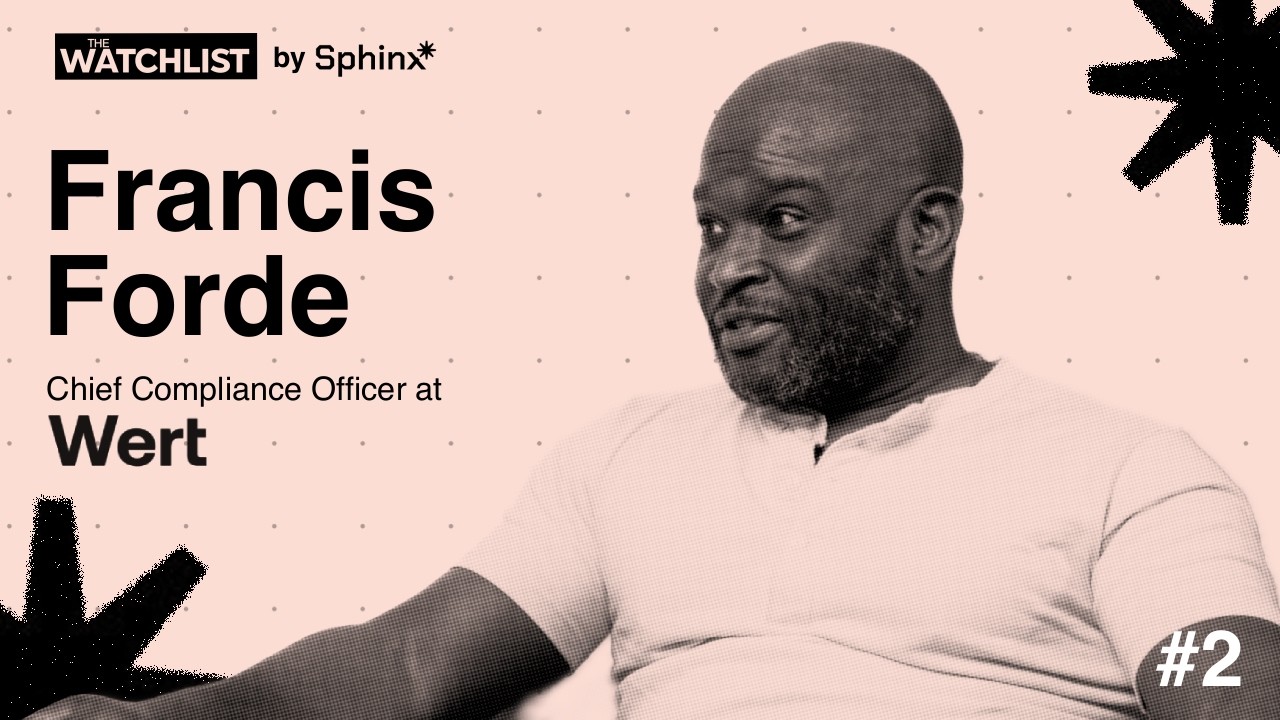

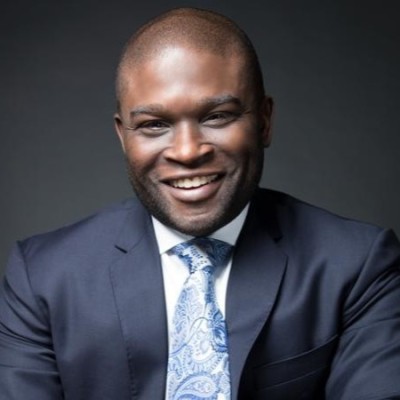
TL;DR: Francis Forde has built compliance programs at Morgan Stanley, Citi, Coinbase, and Varo Bank — where he helped secure the first-ever OCC national bank charter for a fintech. Now Head of Risk and Compliance at Wert, he explains why behavioral KYC matters more than static identity data, how blockchain transparency eliminates guesswork in transaction monitoring, and why he views compliance not as a cost center but as a savings center. Wert's AI-powered onboarding reviews run 24/7 with a consistency no human shift can match.
What This Episode Covers
Francis Forde has spent the last decade moving between traditional banking and crypto, building compliance infrastructure at every stage. He started as a broker at Morgan Stanley, investigated financial crime at Citi, joined Coinbase during the digital asset surge, then helped Varo Bank earn an unprecedented national bank charter before landing at Wert to lead risk and compliance for a Web3 payments company. This conversation tracks that entire arc — from the false positive problem that plagues legacy monitoring to the fundamentals of building a crypto compliance program that actually enables growth rather than blocking it.
Francis also shares why jiu-jitsu shapes how he leads, how perspective-taking from risk work has changed his personal relationships, and what he would do if compliance automation freed him from the desk entirely — he would be a farmer, designing luxury wool-to-suit experiences on his own land.
Who Is Francis Forde
Francis Forde is the Head of Risk and Compliance at Wert, a Web3 payments infrastructure company that connects crypto, card networks, banks, and regulators. Francis entered the industry through an unusual path: a graduate research background in biomechanics led him to law school, which led to a broker role and then compliance investigations at Morgan Stanley. He went on to investigate financial crime at Citi, run consumer compliance at Coinbase during the 2017 crypto rally, and help Varo Bank secure the first OCC national bank charter ever granted to a fintech. That trajectory — scientific rigor, legal training, traditional banking, neobanking, and now crypto — gives him a cross-domain perspective that very few compliance leaders carry. He also teaches, trains jiu-jitsu, and thinks about compliance the way engineers think about friction: invisible when it works, catastrophic when it fails.
Why Behavioral KYC Beats Static Identity Data
Knowing a customer's name and address tells you where to find them after something goes wrong. It does not tell you whether something will go wrong. Francis draws a sharp line between static identity data — the standard KYC fields — and behavioral intelligence, which tracks what a customer actually does in context. At Wert, the compliance team evaluates behavior relative to the specific product a customer is using, because the same transaction pattern can be perfectly normal on one platform and deeply suspicious on another. This matters especially in Web3, where user demographics span people who have never touched an ATM to people who will never walk into a bank. Francis points to a pattern he observed at Coinbase: retirees in their 50s and 60s who had lost savings in 2008 were buying Bitcoin for the first time without knowing how the systems worked. Traditional rule-based monitoring would flag those users. Contextually aware compliance recognizes them as real people recovering from a financial crisis.
Blockchain Transparency Changes What Compliance Can See
The single biggest advantage blockchain gives a compliance officer is visibility. Francis puts it bluntly: he does not need to file a 314(b) request, send a questionnaire, or guess at who a customer is transacting with. He can see it on-chain. Every transaction, every counterparty interaction, every wallet connection is recorded permanently and available in real time. That eliminates the friction and delay that traditional banking compliance lives with daily. Cash, by contrast, is the riskiest asset — once a dollar bill leaves your hand, there is no audit trail. Francis argues this transparency is what regulators should want: a fully visible financial system running 24/7 that no one can quietly manipulate. The challenge is explaining this to regulators who are still evaluating whether crypto assets fit the Howey test. Peter Hazlehurst covers the banking infrastructure side of that regulatory gap in his episode.
Stablecoins, Financial Inclusion, and the Bridge to Mainstream Crypto
Stablecoins solve a comprehension problem that has held back crypto adoption for years. Francis recalls a conversation in 2019 where a friend did not realize you could buy a fraction of a Bitcoin. One USDC equals one dollar — that requires no explanation. But the real impact goes beyond simplicity. Francis connects stablecoins to remittances, cross-border vendor payments, and economic survival in countries like Argentina, Venezuela, and Lebanon, where citizens have watched governments freeze accounts and inflation destroy savings. At Citi, he personally saw customers flying from Argentina to the US to access dollars through workarounds that traditional banking flagged as suspicious. Stablecoins would have eliminated the need for those workarounds entirely. The speed of stablecoin settlement also tests every existing payment rail, creating opportunities for entrepreneurs in smaller economies to sell globally and get paid without the fees and delays that legacy systems impose. Francis believes a dominant global stablecoin — or at least a competitive landscape of stablecoins — could reshape commerce within a decade.
Who This Episode Is For
Frequently Asked Questions
What is behavioral KYC and why does it matter for crypto compliance?
Behavioral KYC moves beyond static identity fields — name, address, date of birth — and evaluates what a customer actually does on a platform. Francis Forde explains that customer behavior must be assessed in context: the same transaction pattern might be routine on one product and anomalous on another. In Web3, where user bases span people who have never used an ATM to digital natives who will never enter a bank, behavioral understanding is what separates false positives from genuine risk signals.
How does blockchain transparency improve AML compliance?
Blockchain gives compliance officers real-time, permanent visibility into every transaction and counterparty relationship. Francis Forde notes that on-chain data eliminates the need for 314(b) requests, external questionnaires, and manual network resolution — processes that create days or weeks of delay in traditional banking. If a customer has made a transaction or interacted with a suspicious wallet, the compliance team can find it immediately without requesting information from any third party.
Why does Francis Forde call compliance a savings center instead of a cost center?
Francis reframes compliance economics around avoided losses rather than operational expense. When onboarding is done correctly the first time, the company never has to terminate a customer relationship, pay back revenue from a bad deal, or absorb reputational damage. The real costs in compliance come from fixing mistakes — cutting accounts, managing regulatory fallout, losing deals that were structured wrong. Good compliance prevents those costs from ever appearing on the balance sheet. Hamza Siddiqui discusses similar scaling principles in his episode.
What role do stablecoins play in financial inclusion?
Stablecoins remove two barriers that have kept underbanked populations out of the global financial system: complexity and cost. One USDC equals one dollar, which eliminates the confusion around fractional crypto ownership. More importantly, stablecoins enable near-instant cross-border payments without the fees and delays of traditional remittance rails. Francis cites real cases from his time at Citi where customers from Argentina flew to the US to access dollars — a workaround that stablecoins would have made unnecessary.
How does AI improve compliance review consistency at Web3 companies?
AI-powered compliance agents deliver the same quality of review at 3 a.m. on a Saturday as they do at 9 a.m. on a Monday. Francis Forde describes how Wert's AI onboarding reviews have eliminated the escalation backlog that used to require his personal attention, freeing human analysts to develop expertise in more complex investigations. The key tradeoff: AI handles first-level review with unmatched consistency, but human analysts remain essential for imagination — envisioning novel fraud schemes and edge cases that no model has encountered before. Auditable AI decision frameworks ensure that every automated judgment can be reviewed and explained.
Episode Transcript
Alex: Francis, great to have you here. You once published academic research in biomechanics and you also helped secure the first ever national bank charter for fintech company from Wall Street market manipulation teams to Coinbase during crypto chaos and our leading risk at a web 3 startup. You've lived every version of compliance across finance's last decade. Today we're going to unpack all of that and I'd like to start from the beginning. You didn't really follow the typical path into compliance. As I said, you were publishing biomechanics research early on. How did you go from scientific research to investigating insider trading and financial crime at Morgan Stanley?
Francis Forde: Thank you for having me. Of course, I like you very much, you know this. It's a pleasure to be here. How did I get from biomechanics to compliance? The bridge really is law school. What really started me looking down the path of law was a project we actually did in the biomechanics lab for an attorney. We did a project for this attorney and it was really interesting because of the case matter and I started thinking about what my next step would be after grad school and my next step was law school. I graduated in 2008, passed the bar, got certified in 2009 and then started looking for my next steps. It was a terrible time in the economy as you remember.
Alex: Can imagine.
Francis Forde: I actually started as a broker for Morgan Stanley. My first job at Morgan Stanley was as a broker, as a financial adviser. And during that time, I got a lot of nos. Every deal that I wanted to make, every thing I wanted to pursue was a no from the compliance guys. They were super risk-averse. And I remember thinking that I knew the people who I wanted to work with. I've been around people I wanted to work with. In my heart my perception was they weren't terrible people. They were good people doing good things. So why would we say no to those deals? First I found out I wasn't good at sales although I love people, I can be persuasive, whatever it is. And second I started thinking where can I leverage a scientific research background, where can I leverage a legal background, where can I leverage my love for pushing business forward, and that's where I landed on compliance.
Alex: Love that. And again, 2008, today now there is AI and whatnot. What did good compliance look like in those environments where it was a bit mayhem in 2008? Let's start with that.
Francis Forde: From my perspective as an investigator, good compliance looked like catch the bad guy. Who is the bad guy? Let's get the bad guy. And at certain times I felt like in our pursuit to catch the bad guy we stepped on some really good guys. Some really good guys that maybe they're not used to what you should do in a financial environment. The customers. They do things that are weird. That's one of the first things I noticed about really doing investigations. People do weird things. People would go to an ATM and withdraw money and then go to the bank, inside the bank, and also withdraw money. Those were things that are atypical. They create some red flags and we do investigations into it. And a lot of those people weren't doing anything wrong. They just didn't understand how to use a system. And that I think is a lot of false positive noise that we get that ironically inhibits us from being able to catch the bad guys.
Alex: How do you think this is going to evolve today? AI is making frauds so much harder to catch. Actual criminals are able to replicate patterns of regular people much simpler and then you're unable to discern the actual truth between real and fake. What do you think has to change in order for compliance to keep up?
Francis Forde: I think that knowing your customer is ultimately the most important thing for compliance. And having an understanding of the things that your customers will do. Not just the biometrics of it. Not just your name and your address and this type of thing. Those things are static. I think they're fine for a compliance program so that when you do catch someone, you know where to find them, but they don't really speak to customer behavior. And the behavior has to do within context as well. At Wert, what we're looking at, we look at the behavior of the person relative to the type of product that we're offering. And I think as we expand into this web 3 space, especially with the rise of Bitcoin, we see a lot of different behaviors that you would normally see with a traditional financial institution. And I guess I'm old enough to really see these transitions. As an example, my older family, they will not use an ATM, believe it or not. They didn't grow up using ATMs. ATM was financial technology for them. It was not a person-to-person transaction. They don't trust it. Then I have friends that are 20 that don't see the point in ever going to a bank ever.
So you see this, and if we're going to be inclusive and make sure that everyone has an opportunity to leverage DeFi and what the brilliance and the magnificence of web 3 and cryptocurrency offers, we're going to have to really sit down and think about what those transactions look like, what the typology looks like.
Alex: That's great. And I want to go back a little bit. You went from threshold banking and you went to Coinbase. You joined the compliance team working on Coinbase consumer right as digital assets were going really mainstream. How did the shift from traditional banking to crypto hit you and what were the biggest shocks or rewrites to your playbook?
Francis Forde: The transition to Coinbase was really interesting actually. It was the first time that when I'd been on all sides of this. I'd helped some litigators in the New York AG litigate against big banks. I'd helped do investigations for the banks against consumers and I was also on the buy side for customers. One of the things about Coinbase that I thought was really illuminating was the fact that I got to see some of the customer service side of things. We serviced a lot of customers who would call and say, "Hey, I want to get my money or I need some help. I need assistance," whatever it may be.
And it really made me think about humanizing the way compliance reaches out or interacts with people. And because this is post 2009, one of the trends that I noticed was the fact that a lot of people were just trying to make up the money they had lost in 2009. This is why I mentioned people who never used ATMs to people who will not do anything but use digital banking. You found all these people who were in their 60s and 50s that were saying, I lost my retirement and now I'm trying to make that up with the rally of Bitcoin, the rally of Ethereum. And so on.
They're doing this without even knowing how to actually use the systems. It's a real need that people have. And I really loved what Coinbase was doing specifically because it gave people the chance to hold on and control their money. You remember 2009, you just watch TV, banks are going bankrupt. They make the announcement on Friday and you can't do anything Saturday and Sunday. You have to sit and wait and Monday you can't get your money. But with cryptocurrency you can have your own wallet. You can control your own destiny in a certain way. And I think that's magnificent.
Alex: It's interesting because you're very passionate about cryptocurrencies.
Francis Forde: Very. Yes.
Alex: And you went from Coinbase back to a fintech, more traditional fintech, to Varo bank. And you helped them secure their first OCC national charter, bank charter. Why go back from a fintech to, well, why go from a crypto company back to a fintech and then you'll later go back to another crypto company, but why that switch?
Francis Forde: My feeling is that when we talk about innovation and we talk about pushing things forward, being a neo bank fits squarely within that principle of your bank is your branch is your phone. There's nothing that you should not be able to do. You have your phone. You should be able to do everything. Pay your bills from your phone. Deposit from your phone. Pay your utility bill, your coffee that I just bought, everything from the phone. It fits squarely within this fintech ideal.
And my hopes at Varo were also for them to be the crypto bank. The bank that is pushing things forward, that we're going to help spin up other crypto companies, other neo banks. But I wasn't in operations at all. This is just my vision and my hope that some bank is going to say what can we do? How can we do things differently? How can we engage everyone? And I think it's through being a mobile institution.
Alex: Did anyone actually do it well?
Francis Forde: I don't think that anyone's doing it, to be honest.
Alex: Revolut maybe. Not even.
Francis Forde: I haven't looked into Revolut as much so I can't say. But I know that if they are then they're going to be a leader.
Alex: Okay.
Francis Forde: I don't see my niece -- my niece is 17. My nephew is 15. They're not going to the bank.
Alex: No.
Francis Forde: They're going to use their phone. And a lot of my friends, you have YouTube, you have AI, you have ChatGPT, Grok, this type of thing. I have a friend, I won't mention him by name, but he is exquisitely intelligent and when he watches something, he does it on 2x. I watch him watching videos and learning and it's almost like he's a computer. He doesn't do anything slowly. He's not going into a bank. And when he learns how to trade, he's putting things in place. I have a lot of friends like this. I think that there is a market for innovation and for pushing things forward and I'm hoping that some bank does that.
Alex: I couldn't agree more. On a completely different topic, I lost my eSIM at some point. Tried to call T-Mobile and they wouldn't give it to me by the phone. You need this and you need that and I had to go in the shop and it's an awful experience. Having to travel 20 minutes to go to a shop to ask for a QR code then to log back into your eSIM, it's horrible. And at least it's only 20 minutes. Banks can take -- opening an account. We have an employee right now who came from Colombia and needed to open an account. Took him weeks to just open an account.
Francis Forde: And I'm not sure why it should. It shouldn't. That's actually, I think, one of the things we had in another conversation. One of the things I think that crypto will solve, or one of the reasons why it's so difficult to understand, is that it does everything. If I said to you that I have this thing, it can do identity. It can do security. It can transfer value. It can be the building block for an institution. It doesn't really sound like -- it's tough to visualize or conceptualize that thing. But if you had a crypto key that was your identity and T-Mobile had that and used that, then it would take you seconds.
Alex: I agree. I feel like this is also the future of compliance. But how do you then convince more traditional banks to adopt a new form of KYC, a new form of KYB, a new form of identity?
Francis Forde: I think you can go about this in a couple ways. My reaction to that is you don't convince them. You just build something on your own and they'll buy it. And I was thinking about that recently. I remember JP Morgan's Dimon mentioned that Bitcoin was trash. I think a couple other banks were mentioning Bitcoin's trash. And I remember this in 2017. And I'm not trying to say that these guys weren't wrong based on the evaluation of what they knew at the time. I'm tracking how things have changed because now these banks are investing in Bitcoin. I think that without trying to determine the motivators for individuals who have whatever experience to adopt something, the thing is to show that it works.
Alex: But the thing is you don't even need -- I agree with you. You have to build something that works. Let's say you don't even have to convince the banks. The banks want to buy. How about the regulators? Because at the end of the day, if the regulators don't approve it, the bank's never going to buy it.
Francis Forde: That's the big question. And when I've looked at some of the notifications come through, some of the things that have happened in the industry, I think one of the biggest things for regulators is again understanding what you're looking at. Understanding that this thing you're looking at -- cryptocurrency, web 3, blockchain -- is this huge thing that has applications in other places, has vast applications. And when you look at the vast applications of it, it's not bad everywhere. As an example, everyone was going back and forth whether blockchain or cryptocurrencies were securities. And I'm thinking, it could be. It could be when it fits Howey. But if it doesn't fit Howey, then it's not.
Alex: Exactly. And let's say there's a young startup trying to do something like that. You did get that first ever OCC national bank charter for fintech, which is -- you must have convinced the hell out of regulators.
Francis Forde: We worked with some very knowledgeable people. I have to say that the people I worked with at Varo were very well seasoned in risk and compliance and legal. I never had any doubt that it would happen. I didn't go to work any day of the week thinking this might not happen.
Alex: But what do you think they had to have in order for it to happen? If we want to replicate what you've done for getting an OCC national bank charter for fintech to allowing KYC compliance to be done through a crypto key, what do you need? What does a company need? What do people in the company need? What needs to be proven to the regulators in order for it to work out?
Francis Forde: Have the courage. I really do mean that. If you get into the mindset of regulators are just there to punish you --
Alex: Yeah.
Francis Forde: What do you always avoid? You always avoid getting punished. But if you get into the mindset that hey, I'm going to present something and be persuasive about the benefit of it --
Alex: Yes.
Francis Forde: And when I'm having a conversation internally, I think about who I'm speaking to. If I'm speaking to a compliance person, I highlight the compliance benefits. If I'm speaking to the finance guys, I highlight the difference in cost. Or the things that matter to that person. If a regulator wants to keep the financial market safe and they're concerned about the speed of transactions and so on, I think if you are able to say, "Hey, we have this totally transparent thing that you can look at anytime 24/7 that's going to have every transaction that ever happens on it ever." Which means that no one's getting away.
No one is getting away. I remember in 2017 guys were saying, oh, people just steal with Bitcoin. I'm thinking, the most risky asset, in my opinion at least as of right now, is cash. If I give you a dollar, you don't know where that goes. I don't know whose hands were on that. But if I send you a Bitcoin, we know exactly when it was made, every time it changed hands. If we attach an identification, a key to a person when they're born, we know everything that person is going to do or is doing. That I think is a regulator's dream.
Alex: Don't you think it's often times -- we, for instance, work with you guys and we help build these agents that can automate compliance. And the amount of banks we talked to that are saying, "Ah, it's too good to be true," and they don't believe it. And of course you need to put it into action and show them. But it took us quite a bit of time to convince our first bank and once the first bank is convinced it's much simpler to convince the other ones. Do you think it's the same for regulators? You need to find the regulator that's going to give a shot.
Francis Forde: Yes. I think there's a mindset in place. And one of the things is that history matters. And I know that in tech before, it was move quickly and break things. I think that works when it's not so much money. It works when it's not the financial markets. But when it's capital markets, when it's deposit institutions with people's life savings, you're managing mortgages, moving quickly and breaking things is not an option. We have to move cautiously, but I liken it to friction. Friction is that thing that runs in the background that no one sees, but it allows you to have the best maneuverability possible.
That's how I think about compliance and risk. I don't need to be seen. I don't need thank yous. I don't need any of this. What I want is to make sure that when you hit that corner, you can go faster. When you need to stop, you can stop. When you need to accelerate, you can accelerate. All that's what I'm thinking about when I think about compliance.
Alex: I'm curious about something. Most of the compliance we have today is obviously web two. You're at a web 3 company, Wert, right now. Is there anything you think today is distinctly different in web 3 compliance, or something you think in the future will be distinctly different?
Francis Forde: Well, the speed of it for sure. A couple things. First, settlement and transaction happening at the same time is super novel and it continues to be novel. And then the idea that you could start an account and within a matter of seconds move millions of dollars if you wanted to -- I think it's unheard of. That's one of the compliance hurdles that you'd have. And the check on that is the fact that unless this person is completely new, never did a transaction in web 3 ever, you can find what they've been doing. Our head of fraud, he's super excellent. And he will find you if you're doing something wrong. Again, it's thinking about how can we help those individuals who really want to leverage technology, leverage their resources to make money while segregating the bad guys.
I think about the good guys more than the bad guys. I think about helping the good guys and if you're a bad guy, then we remove you immediately.
Alex: I think that's a big thing about risk and compliance and fraud in general is that too many people focus on the bad guys, but then because you don't focus on the good guys enough, the user experience they have is horrible. Being asked 20 times back and forth with documents and being debanked because you have a similar name to a sanctioned individual, you can't use that fintech and coming from a high-risk country. I do agree that crypto will have a lot of that good effect on fintech. My belief is that stablecoin is probably the best bridge between traditional finance and crypto and for it to become even more mainstream and allow crypto KYC to potentially happen one day. Do you agree?
Francis Forde: Short answer is yes. I think stablecoins are exceptional. If you ever wanted something to be that bridge of understanding -- I'll give you an example. I remember I was talking to a friend of mine. I think this was around 2019 and my friend mentioned that they didn't know if they could buy Bitcoin because Bitcoin is so expensive. And it hit me that in 2019 people still didn't know you could buy a fraction of a Bitcoin, which is interesting because obviously you can. But in thinking of stablecoins where it's, if I get one USDC, it's $1. It's not very much to think about from a consumer's point of view. You don't know all the stuff in the back. All the stuff in the background is different. It's running on whatever chain, but this is easy to understand. But what's really great is, and I think someone's going to solve it, how fast payments can happen. It's amazing how fast payments can happen. It's going to test all kinds of current rails in terms of being able to get things done quickly. The other part to it that I think is interesting for anyone who values fairness -- it creates an ability for you to have foreign vendors across platforms. If you make a nice leather shoe somewhere and you want to get paid in USDC and you have someone who's willing to ship it across the globe, then that's an opportunity for you. I think it would actually feed entrepreneurship as well.
Alex: People are seeing it. I would agree that for me the main use case of stablecoins isn't so much dollar to dollar. I don't think there's a massive stablecoin need for people that are just in the US and transacting just in the US. But when you have remittances, paying people abroad, Argentina having the biggest inflation it's ever seen, which is better now, but being able to keep your money from inflating and connect it some way to the dollar while not having all those fees that you have when doing remittances, is insane.
Francis Forde: I'm glad you mentioned Argentina actually because it made me think of something that I experienced at Citi. We'd see a lot of odd transactions from people and people would literally fly in from Argentina to the US to do some weird things because they needed US dollars. I think stablecoins would have solved that problem. USDC could solve that problem. You don't have to do weird stuff. And even if you did do something that's odd in terms of traditional banking, we still see it on the chain so we know what you're doing. And then it brings in more information. The more information you have of understanding customer behavior, the more likelihood you're going to be able to catch the bad guys. This is what I think about all the time. The more information, the more we understand. You mentioned it earlier in this conversation.
Customer experience drives customer behavior and customer behavior drives the way people transact. The way people transact -- and this is just linearly thinking -- literally are the things that would have us determine what red flags are and what's suspicious or anomalous behavior. And the more we get an understanding of that, the more we can refine products to make sure it's a good product fit or what have you, the better off we'll be. This is the product side, just introducing new technology and understanding how people are going to use it.
Alex: Today stablecoin adoption -- I think I was at a stablecoin conference recently. How was that?
Francis Forde: It was pretty good.
Alex: And the number of billions being transacted in stablecoins is already increasing, but it's still a fraction. It's still not completely mainstream yet. Imagine 5 years from now, 2030. How does the world change?
Francis Forde: How does the world change?
Alex: What is the biggest impact you think stablecoins might have on the world?
Francis Forde: I'm wondering if we're going to start seeing a single -- and this is just speculation -- will we have a single global currency, something completely dominating across the globe? Or maybe we have people who are in smaller shops starting to do arbitrage, deciding what currency they're going to sell their products in. I think it's fair to pay someone when they work. I can't stress this enough. You should get paid something that you can live off of when you work. And a global currency that's accessible in the way that stablecoins will be accessible -- I'm not even sure what that looks like. The possibilities are endless.
As an example, before, you got to travel 20 minutes, you said, to a branch or wherever. And then you got to have all these different IDs and all this stuff. All that slows it down. Now, you just need a phone and a network. If I'm thinking about the things that are supporting this, in 5 years or 10 years, I think the networks are what's going to be the big change. What do the networks look like that allow someone in the mountains versus someone at the beach versus all these different places that never had access? And then what does that look like from a goal perspective in terms of now you have freedom of movement? Imagine working remotely. I don't know, but it's exciting.
Alex: It's very exciting. I think to your point it is going to allow more connections and the ability for everyone to be at least on the same level of pay or at least being paid, which I think is still a massive problem. And it will allow I think for quite a bit of talent to interact with the US more. I'm hoping it's going to be just a virtuous cycle and less corruption as well. I think especially on the government level, from the moment you have stablecoins, countries like Argentina, Venezuela, Lebanon are going to have much more of a problem blocking the accounts of their citizens. It'll be interesting to see how that's going to shape the next few years as well.
Francis Forde: We're going to really find out who's connected to what. That'll be interesting.
Alex: I want to go back into startups because obviously you've loved startups and it seems like you've always gone earlier stage. Coinbase was pretty big. Now it's completely massive. Then you went to Varo and today to Wert. And one thing you said at the very beginning of the conversation is, when you were at those traditional banks, deals would be killed or slowed down by compliance. And I do think this is something that people often see. It's, okay, compliance is what is going to kill my deal or is going to drag on forever because of compliance. How do you flip the narrative? How have you done it in those three companies so that compliance may be seen as a growth enabler rather than something that's going to kill your pace?
Francis Forde: I've had the most influence at Wert. And in that position working directly with our CEO, what I've thought about the most in terms of making sure that we have a compliance culture that makes sense is leveraging everything around us. We leverage technology. We have very open and candid conversations about what's permissible, what's not permissible. I don't always start with a no. Actually, I seldom start with a no. I start with a yes, maybe. This is what has to be in place. And then once those things are in place, because we can have very little -- especially using your product -- there's not much variability. When I say variability, I mean variability in assessing a customer. If we have these particular rules, your AI is going to give us those rules versus a person who works 10 hours a day or 15 hours a day or whatever it may be. Hour one looks a little different than hour 15. But with leveraging technology, we build a consistency. And I've said before I think that having a healthy relationship where you explain things in a way that makes sense -- I don't think of compliance as a cost center at all. I think of compliance as a savings center.
Fines, your taxes. Having to cut accounts because something went wrong in the beginning or terminate relationships because something went wrong. That's a tax. That's a cost. Good compliance means that when we onboard a customer, they can stay here unless they do something wrong. It's not going to be their fault. It has to be their fault when they do something wrong. Our reputation is going to be stellar. I think of it as, we're going to save you money because when we do a deal, the deal is done the right way. We never have to pay back anything. When we onboard a customer, it's done the right way. We don't have to cut a relationship. In my mind, compliance is again the friction. We want to be able to move quickly and safely. I'm making sure that you don't hit these guardrails. And that's what I explain to the sales guys as well.
Of course, there's always friction. I think the friction is necessary. They want to do a deal really quickly. I want to do a deal really safely. I don't think in terms of speed. I think in terms of safety and safety for me means when we make a deal, we don't have to pay anything as a consequence of that deal.
Alex: I think that's a great way of seeing it actually. And the interesting thing is we've been working together for a couple of months --
Francis Forde: A couple years soon.
Alex: A couple years soon. One of the earlier clients, which is great for us. And there was a lot of human in the loop initially and now maybe less. I want to have your understanding about automation versus oversight. Wert is growing really fast. You obviously can't manually review anything anymore. And that's what we're trying to help you with as well. How do you balance the automation with human accountability while keeping your team comfortable?
Francis Forde: I think it's more random checking. Random but still guided. That's how I've looked at it so far. Working with AI is very new to me. Maybe if you ask me this question in a year, it'll be a different response. But I think that accountability is very important of course. But once trained appropriately, I don't know that a human being can repeat the same results as consistently as an AI. Actually, I do know a human being cannot.
Alex: I agree. They can't consistently repeat what an AI agent can do with the same level of quality. But what they can do is they can look for things that are outside of the scope of what the AI has learned so far. And I think that's why humans are ahead. But as far as just first level understanding a customer, doing the review to onboard a customer, I think AI is going to have it. I don't know why anyone wouldn't --
Francis Forde: That's for sure. And one of the things that we've been doing with prospective customers right now and even real customers is we'll go through their backlog of cases they've already reviewed. We're going to give them all the true positives that their teams missed. And because it's impossible -- we have customers that have 50,000 cases in the backlog and their teams are working 12, 13 hours a day to try and get through it. You're going to miss something. For sure you're going to miss something.
Alex: I'll do a bit of advertisement. What do you think has been the best thing about working with Swings?
Francis Forde: The best thing? Or the worst thing as well, but I'm not putting that in. It's funny you mentioned that because as you were speaking about it, I was thinking I used to have to do these reviews myself. Carlos and I would do some of these reviews ourselves. Things are being escalated and there's this channel that we have for the escalations and it would be chirping and chirping and chirping.
And as you were talking, I was thinking this has quieted. I don't know the last time I even had to do one. By the time it gets to me, it's a serious issue. And Carlos is happy about it. Once Carlos is happy about it, I'm happy about it. What's the best thing? The best thing is having a very consistent quality of review that doesn't matter when it happens. It could happen on Saturday. It could happen on Sunday at 12:00 a.m. The individuals who are looking at it are developing more complex skills than if they were just looking at this thing and being tired all day. When I manage a human being, and when you manage a human being, you can't have the expectation that they're going to be 100% at 9:00 a.m. as they are at 9:00 p.m. That they're going to be happy if they have to do a review at some obscure time like 3:00 p.m. on a Saturday. You have to call people in. People have their lives and they want to lead them. I think because the AI agents you have for us are very focused, it's very deliberate what you've done. I see the reports on how you are improving them over time. I think it's incredible. I love it.
Alex: Love it. Some of our guys have very much enjoyed it. It's freed up their time to do more complex work, which I think has engaged them better. And again, the human element. Staying engaged, staying curious, staying innovative. Great feedback. It's been wonderful.
Francis Forde: Great. Love it.
Alex: I'm curious. Do you expect AI-specific regulatory guidance soon? Do you think regulators --
Francis Forde: Yes. 100%. On the flip side of AI, it's a black box. And it can do anything and search out, use procedures to reach any result. It lacks empathy. It lacks -- what am I trying to think? It doesn't respect privacy. This is a very dangerous thing when you think about it. It doesn't have feelings, so it doesn't really give a damn.
Alex: It's a little bit like I always use the analogy of --
Francis Forde: It will be 10 times more safe than a real human driver.
Alex: But if there's one accident, it's over. Cruise had one guy get run over by an autonomous car and that was it. Company stopped operating and now GM shut it. But do you think we're at risk of the same thing with AI? Everything looks good until it's not and then AI winter or something comes around.
Francis Forde: I think it's always a risk. Yes, there is a risk that something catastrophic could happen and then we're going to have a group of individuals who say this thing happened, therefore will always happen. And we have to protect, so therefore it's this all or nothing thing where it's no more of XYZ, whatever thing. I think having appropriate guardrails -- and maybe I introduce this now -- AI compliance would be the thing to consider. Maybe there's a commission that says we're going to make sure we build in these safeguards. If we see certain things -- because maybe you can deploy an AI compliance agent for AI. I don't know.
Alex: It's going to happen.
Francis Forde: It should, because I don't think a human is going to be able to keep up with it. Interestingly enough, we'll use AI to --
Alex: AI --
Francis Forde: To monitor AI.
Alex: For sure. Okay. You've led teams across banks, exchanges, startups. Just a general question, what's your leadership philosophy as a chief risk and compliance officer?
Francis Forde: Managing the human and really leveraging the people around you. This is my thing for everything actually. Whether I'm teaching a class -- and you've been in meetings with me. I say yes a lot. Because it doesn't really matter. I think that one of the things is you have to empower people around you and let them know that their ideas are good ideas as well. I'm not sure if you know this, but Carlos and I don't always agree. But I think that when we're having a conversation about an ultimate goal that we have, my idea doesn't have to be the right idea. I don't care about that.
What I care about is making sure that I develop individuals in a way where they're confident, they're competent, they believe that I will back them up 100%. If we make a mistake -- actually, I don't even believe in wrong or right. I believe in reasonable. If something we've decided to do goes wrong for whatever reason, has a negative outcome, we all own it. No problem. What do I think? I manage a human. I try to make sure that they're able to voice their ideas and the idea that wins, in terms of what we do, everyone is all in on it.
Alex: 100%. Love it. We're going to finish this with a quick lightning round of rapid fire.
Francis Forde: Sure. 5 seconds a piece. Let's go.
Alex: A sentence a piece or something like that. What's a hill you'll die on?
Francis Forde: What's a hill I'll die on? When something's a no and it's a consequence of some really great research, I'm not budging.
Alex: Good. Most overhyped crypto or fintech buzzword.
Francis Forde: Most overhyped. I don't know.
Alex: Or principle.
Francis Forde: That there is a solution for everything.
Alex: Most underrated compliance practice startups ignore.
Francis Forde: Interacting with your other business units.
Alex: Why?
Francis Forde: Because I think that sometimes people believe that you have to be in this silo and you have to be a police officer. We're not that. We're protectors. In order for me to protect you, I have to know you.
Alex: One regulation you'd rewrite tomorrow.
Francis Forde: Oh my goodness. One regulation tomorrow. I'm not prepared to answer that one.
Alex: Okay, good. The regulators will be happy about it. Hardest part of explaining crypto to a regulator.
Francis Forde: It's so vast. It has too many applications. This is a product idea. Anytime -- I see crypto all the time so I understand this. It's like we're looking at the same thing over and over, you get to understand it more and more. But when you try to explain to someone else they're saying, "But it can send value, but it can be this -- what is it then?" And that I think is the hardest part.
Alex: We've been automating a few things for you, but if you could automate another compliance task, what would go first?
Francis Forde: Oh, I was thinking this the other day. Risk assessments, man. Risk assessments. I was thinking, I'm going to renew our risk assessment. I was thinking, it would be great if I could have some inputs and have someone do this.
Alex: We'll have a chat later.
Francis Forde: Please.
Alex: Any hobbies that keep you grounded or shape how you lead?
Francis Forde: Jiu-jitsu.
Alex: Oh, lovely.
Francis Forde: I think that jiu-jitsu is possibly the most honest sport that I have ever participated in. I get on the mats and no one asks me my age. No one asks me about what I studied. They just mop the floor with you if they can. It is skill versus skill and I love it.
Alex: I used to be an amateur boxer.
Francis Forde: So you know.
Alex: I know. It's the best thing ever. You just go in a gym and then don't ask any questions. Go hit a guy and then you become really good friends.
Francis Forde: That's the other part. Yes.
Alex: I love that. Has spending years thinking about risk changed your personal life?
Francis Forde: Yes.
Alex: How so?
Francis Forde: Thinking about risk and jiu-jitsu actually requires you to always have perspective thinking. You have to put yourself honestly in someone else's shoes. And it's actually overwhelming very often. But when I started using that principle with my parents, with my niece and nephew, with my sister, it starts to really illuminate things. It's this weird thing where, huh, you're not thinking how I'm thinking and you did this and I thought it was for a bad reason, but it's actually for a good reason from your perspective. People aren't out here trying to hurt you necessarily. They're like -- everyone's thinking they're doing a good job. And if you change your perspective, then you realize that the conversations become easier, less tense. I love it.
Alex: And last one. If you weren't in risk and compliance, what would you be doing today?
Francis Forde: You want to know what I really would be doing? I'd be a farmer.
Alex: Yeah.
Francis Forde: I think about it all the time. I'd be out here trying to create food forests. And I'd be a city planner, still in farming. Plant fruit trees everywhere. When I say farmer I mean farmer in the most pure sense. And I was thinking about what would be a luxury experience if you were a farmer. What if you had someone -- if I'm farming sheep, I'm farming sheep and I say, "You know what? You can come to my farm and you can choose the sheep that will get the wool that will make the suit that you want." That's a luxury experience.
Alex: Maybe we'll automate compliance enough for you to be able to do that. In the meantime --
Francis Forde: Dude, if you make that dream come true, I'll be ever in debt to you.
Alex: Well, Francis, in the meantime, it was great having you here. Thank you so much. And thank you for everyone for listening.
Francis Forde: Thank you.
Alex: All right.
Francis Forde: Thanks, man. Appreciate it.
View full transcript
Subscribe to the Podcast